
Have you ever wondered how your mind transforms a chaotic stream of sensory data into a clear, universal truth? This mystery lies at the heart of agent intellect theory, a profound philosophical framework that explains how we transition from merely perceiving the world to actually understanding it. By viewing the mind as both a receptive vessel and an active force, you can begin to see human cognition not just as a biological process, but as a sophisticated bridge between the material and the metaphysical.
Imagine your passive intellect as a blank slate, full of potential but waiting for a spark to bring it to life. The agent intellect acts as that spark, a mental “light” that strips away the noise of individual experiences to reveal the timeless concepts underneath. Understanding this classic theory allows you to explore the roots of modern cognitive science while gaining a deeper appreciation for the unique power of your own consciousness.
Key Takeaways
- The human mind operates through two distinct functions: a passive intellect that acts as a receptive blank slate for sensory data, and an agent intellect that actively processes that data into understanding.
- The agent intellect serves as a mental ‘light’ that strips away specific material details from sensory images to reveal universal, abstract concepts.
- Historical debate centers on whether the source of thought is an external, universal mainframe shared by humanity or an internal, personal faculty unique to each individual soul.
- Agent intellect theory provides a foundational metaphysical blueprint for modern cognitive science, mirroring contemporary concepts of neural integration and high-level abstraction.
Aristotle And The Passive Intellect As A Blank Slate
Aristotle invites you to imagine your mind not as a cluttered attic, but as a perfectly smooth, empty wax tablet waiting for its first mark. This concept, known as the tabula rasa, suggests that you are born with a passive intellect that possesses the incredible capacity to become all things through learning. Before you ever form a complex thought or solve a problem, your mind exists in a state of pure potentiality. You act as a receiver, standing ready to absorb the vast world of information that surrounds you through your senses. This foundational state is essential because it ensures that your mind is unbiased and open to the objective truths of the universe.
When you encounter new information, your passive intellect serves as the canvas upon which the world paints its images. Think of this stage as the quiet moment before a light is switched on in a dark room, where everything is present but not yet visible to your awareness. You hold the potential to understand mathematics, art, or history, but those ideas remain dormant until they are acted upon by a higher process. This transition from potential to actual knowledge is what makes the human experience so dynamic and unique. By recognizing your mind as a blank slate, you can better appreciate how you bridge the gap between simple sensory input and the deep, abstract reasoning that defines your intellectual life.
The Illuminating Power Of The Aristotelian Active Intellect
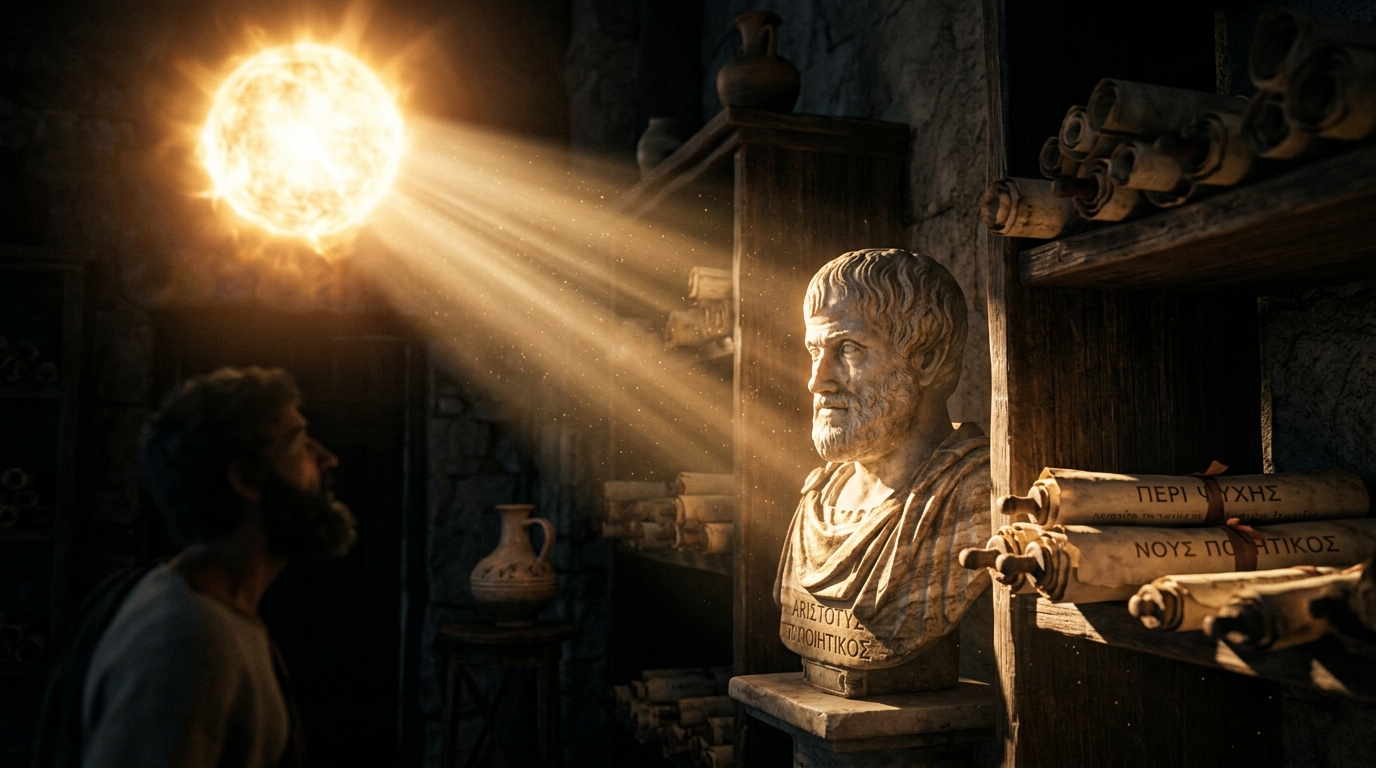
You can think of your mind as a dark room filled with objects that you cannot yet see or name. While your senses collect raw data from the world, these images, which philosophers call phantasms, remain trapped in their material details until something illuminates them. This is where the Agent Intellect steps in, acting as a mental spotlight that shines upon your sensory experiences. By casting this light, the intellect strips away the specific, physical qualities of an object to reveal its underlying essence. You no longer just see a specific tall tree with rough bark, but you begin to understand the universal concept of a tree.
This transition from potential to actual knowledge is what bridges the gap between the ancient insights of Aristotle and the rigorous logic of Scholasticism. Your passive intellect acts as a blank slate, ready to receive information, but it requires the active power of the Agent Intellect to process that data into actual thought. Without this illuminating force, you would be overwhelmed by a chaotic stream of sights and sounds without any way to categorize or understand them. By engaging with this agent intellect theory, you can see how your mind is not just a passive observer but a powerful tool that actively constructs meaning from the world around you. This process allows you to move beyond mere perception and enter the realm of true intellectual discovery.
Avicenna Versus Aquinas On The Source Of Thought
Imagine you are trying to solve a complex puzzle in a dark room until someone suddenly flips a light switch, allowing you to see the patterns clearly. For the Persian philosopher Avicenna, that light switch is not actually inside your head, but is instead a single, celestial “External Mainframe” shared by all humanity. He argued that your individual mind is simply a passive receiver, waiting to be plugged into this universal Agent Intellect to download the abstract truths of the universe. In this view, your personal thoughts are less like a private collection of books and more like a live stream from a divine, cosmic server that grants you access to higher knowledge.
Thomas Aquinas took this radical idea and brought it back down to earth by placing that power directly within your own soul. He believed that if you were going to be a truly free and rational being, you needed your own internal “light” to process the world around you. To Aquinas, the Agent Intellect is a personal faculty, a specialized tool that your mind uses to strip away the messy details of sensory experience and reveal the universal concepts beneath. Instead of relying on an external broadcast, you possess a built-in capacity to transform raw data into actual understanding through your own mental effort.
This historical debate between an external source and an internal power highlights a major turning point in how we understand the human transition from potential to actual thought. When you grasp a difficult concept today, you are participating in a mystery that has fascinated thinkers for centuries, questioning whether your insight is a gift from a higher intelligence or a triumph of your own cognitive machinery. By comparing Avicenna’s cosmic intellect with the personal soul of Aquinas, you can better appreciate the sophisticated ways medieval thinkers bridged the gap between ancient metaphysics and the mechanics of the human mind. This shift toward a personal intellect helped lay the groundwork for modern views on individual agency and the nature of human consciousness. This shift toward a personal intellect helped lay the groundwork for modern views on individual agency and the unique power of human reason.
Bridging Ancient Metaphysics And Modern Cognitive Science
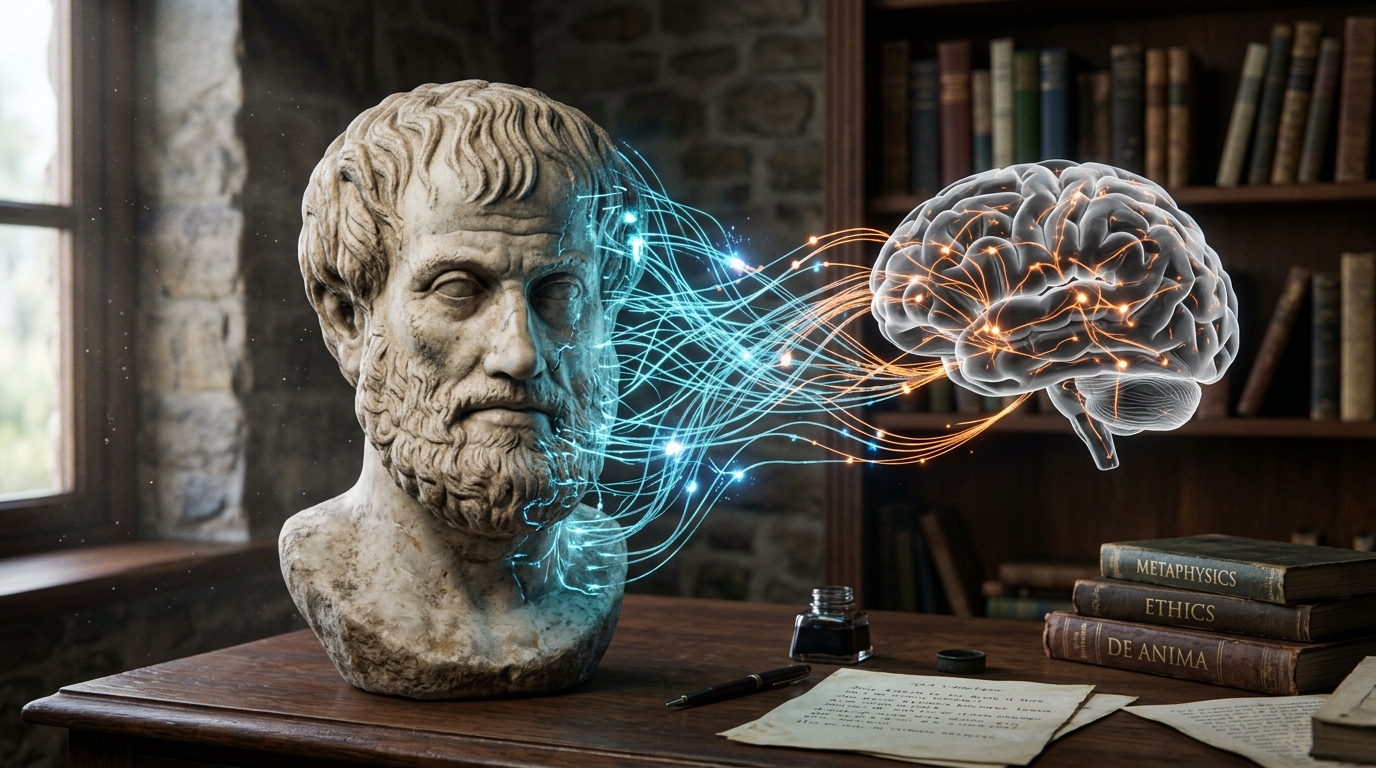
When you look at the leap from raw sensory data to complex abstract thought, you are standing at the very intersection where medieval metaphysics meets modern cognitive science. While Aristotle spoke of the Agent Intellect as a light that illuminates the mind, today’s researchers use terms like neural integration and high-level abstraction to describe the same phenomenon. You can think of the Agent Intellect as the blueprint of reality for understanding how your brain transforms a mere collection of pixels or sounds into a universal concept. This ancient framework provides a sophisticated vocabulary for discussing how you move beyond simple observation to reach the “aha” moment of true insight.
Modern discussions about artificial intelligence and human consciousness often circle back to this transition from potentiality to actuality. You might find it fascinating that the medieval struggle to explain how we “strip away” material details to find the essence of an object mirrors current debates on how algorithms categorize data. By viewing your mind through the lens of the Active Intellect, you gain a deeper appreciation for the unique work your consciousness performs every second. This bridge between eras shows that your ability to reason is not just a biological process, but a profound intellectual journey that has captivated thinkers for millennia.
Recapping this journey from potentiality to actuality reveals that the Agent Intellect remains a vital framework for understanding the unique depth of your own mind. It reminds you that learning is not a passive reception of facts, but an active, energetic power that you wield to make sense of the world. By reclaiming these classical insights, you can better address modern questions about what you actually know and what it truly means to think and understand. Ultimately, the Agent Intellect serves as a testament to the enduring mystery of human cognition and your place as a rational observer in a complex universe.
Illuminating Your Mind Through Agent Intellect
Understanding the agent intellect theory allows you to see the human mind as more than just a passive observer of the world. You have explored how this concept functions as a bridge between the potential for knowledge and the actualization of universal truths. By acting as an intellectual light, the agent intellect transforms the raw data of your senses into clear, abstract concepts that define human reasoning. This transition from Aristotle to the Scholastic thinkers shows a fascinating evolution in how we perceive our own cognitive abilities.
As you reflect on these historical perspectives, you can appreciate the profound impact this theory had on the development of Western and Islamic thought. Whether you view the active intellect as a personal faculty or a universal force, its primary role remains the same: it is the engine of human understanding. This framework provides you with a deeper appreciation for the ancient roots of modern cognitive science and metaphysics. By engaging with these classical ideas, you are positioning yourself to better understand the enduring mysteries of how we think and learn.
Frequently Asked Questions
1. What is the primary difference between the passive and agent intellect?
Your passive intellect acts as a receptive blank slate that stores sensory data and potential knowledge. The agent intellect is the active force that illuminates this data, transforming raw images into abstract, universal concepts you can truly understand.
2. Why does Aristotle compare the mind to a wax tablet?
This comparison illustrates that you are born with a mind of pure potentiality, ready to be shaped by experience. It emphasizes that your intellect is a neutral canvas, allowing you to receive objective truths from the world without prior bias.
3. How does the agent intellect function as a mental light?
Just as physical light makes colors visible to your eyes, the agent intellect makes truths visible to your mind. It strips away the specific, messy details of a single experience to reveal the timeless essence underneath.
4. Is the agent intellect a biological part of the brain?
While modern science looks at neurons, this theory treats the agent intellect as a metaphysical bridge between your physical senses and abstract thought. It represents the unique power of your consciousness to grasp truths that go beyond mere biological reflex.
5. How do you use your agent intellect in everyday life?
You use it every time you recognize a pattern or identify a general category, such as knowing a chair is a chair regardless of its shape or color. It is the silent engine behind your ability to learn from the past and apply that wisdom to new situations. This exploration of the mind’s internal workings is central to the mind-body problem which continues to challenge philosophers today.
6. Can the passive intellect function without the agent intellect?
No, because the passive intellect on its own is like a dark room filled with furniture. Without the agent intellect to provide the spark of clarity, your mind would remain a collection of sensory noise without any actual comprehension or insight.