
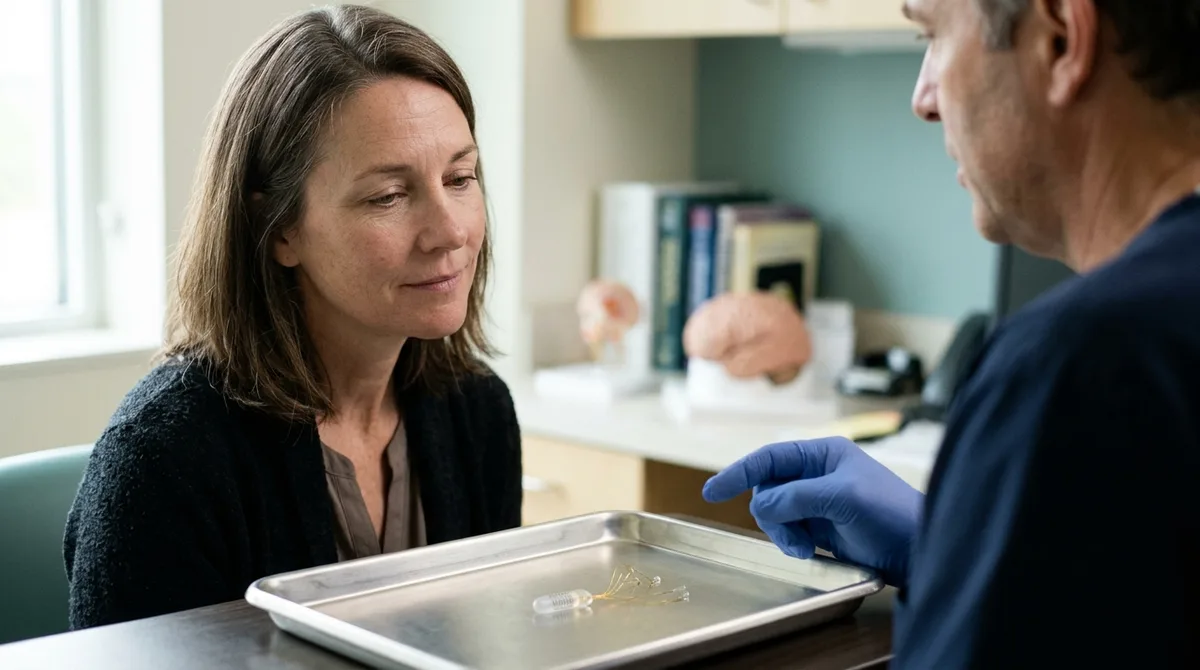
The neuroethics of brain implants asks whether placing hardware inside the human brain can respect your identity, autonomy, privacy and fair access to care. In the United States, a study of an implanted brain-computer interface needs Institutional Review Board sign-off before it begins and, if it is a significant-risk study, FDA Investigational Device Exemption approval. Each participant must also give informed consent under 21 CFR Part 50.
Those rules separate a research study from a product you can buy. Even inside trials, the record is still small. A 2023 BrainGate analysis of 14 adults recorded 68 device-related adverse events, six of them serious. Before you decide anything, make sure you know exactly what each study asks of you, from surgery to years of follow-up.
Key Takeaways
- No implanted brain-computer interface is available to buy today as a medical device, so if someone offers you one for a fee, ask which regulator has cleared it.
- Neuralink’s PRIME Study brochure describes a commitment of about six years, with a primary study of roughly 18 months followed by five years of follow-up across 20 visits, so you should map every visit onto your own calendar before enrolling.
- The 2023 BrainGate analysis of 14 adults recorded 68 device-related adverse events, six of them serious, but that small record covers a single system and cannot predict how other implants will perform.
- Brain data protection is uneven across jurisdictions, so you should request a written data plan that states who stores your recordings, how long they are kept, whether they can be shared or used to train software, and whether they can be deleted if you withdraw.
- Trial participants should confirm in writing who pays for complications, device removal and follow-up travel, and what happens to the implant and their care if they withdraw or the company stops operating.
What Makes Brain Implants an Ethical Question?
Neuroethics is the branch of ethics that examines the moral questions raised by brain science and its tools, including implants that read or change brain activity. For implants, the core concerns are autonomy, personal identity, mental privacy, consent, fairness of access and the risk of misuse. A hip replacement changes how you walk. A device in the brain can, in principle, affect how you remember, decide and see yourself, so the stakes differ in kind.
Philosophers have long asked whether a person changed by a device is still the same person, and whether choices made with a machine’s help are fully your own. Science fiction explored minds linked to computers for decades before the technology existed, and those stories shaped what people expect from the idea. Those expectations can run ahead of the evidence, so it pays to slow down and look closely.
The question is not only whether a device works when it is switched on. It is also what the device does to you over years. Neuralink’s PRIME Study brochure describes a commitment of about six years: a primary study of roughly 18 months, followed by five years of follow-up with 20 visits. That is a long relationship with hardware, and it raises questions about what happens when support ends or the device must come out.
Privacy adds another layer. A 2026 review of implantable BCI data identifies unresolved gaps, including reliance on conventional de-identification, limited individual control and unclear ownership. If your brain signals can be recorded, who holds them, and for how long?
Are Brain Implants Available Today or Still in Trials?
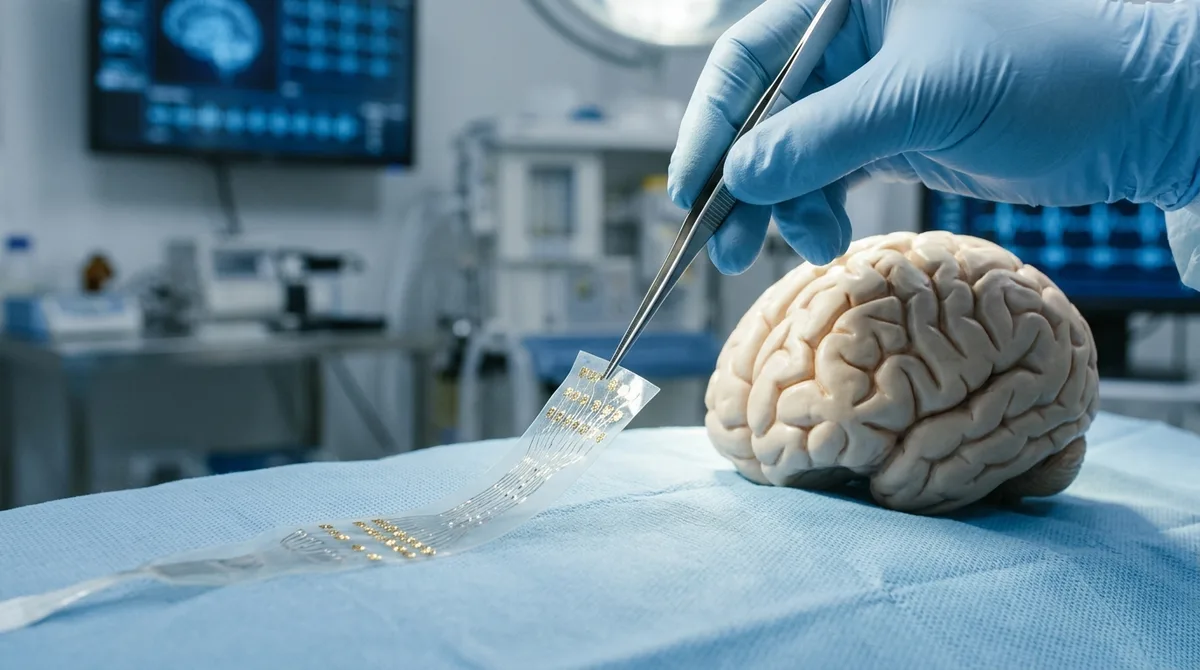
No implanted brain-computer interface is available to buy today as a medical device. A 2024 review of implanted BCI trials covering 1998 through 2023 found 21 research groups, 28 trials and 67 participants. It reported that none had been approved by a regulator for the medical-device market. Under FDA guidance from 2021, an implanted BCI is a neuroprosthesis meant to restore lost motor or sensory capabilities in people with paralysis or amputation, which is why current studies focus on those patients.
Company announcements can sound like product launches, so read them closely. Neuralink reported 21 participants enrolled worldwide on January 28, 2026, but that is the company’s own count, not an independent check on safety or effectiveness. The company also states that its devices are investigational and not approved by the FDA or other regulators. Synchron describes its Stentrode, delivered through a blood vessel, as investigational and not approved for commercial use in any geography, as stated on its website.
Free participation is not a price list. U.S. rules allow a sponsor to charge for an investigational device only enough to recover manufacturing, research, development and handling costs, and the sponsor must justify that amount in its application. Because no implant is approved, there is no general retail price, and elective enhancement is not an established market. If someone offers you a brain implant for a fee, ask which regulator has cleared it.
How Do Medical Uses Differ From Enhancement?
Medical uses treat a diagnosed condition, while enhancement aims to give a healthy person abilities beyond normal function. Deep brain stimulation, which sends electrical pulses to deep brain structures, is used for movement disorders such as Parkinson’s disease. Vagus nerve stimulation, which works through a nerve in the neck, is an established treatment for certain seizure disorders. Cochlear implants, which bypass damaged inner-ear structures to provide hearing, have an even longer clinical record. Because these devices have years of use behind them, their ethical debates center on consent, long-term follow-up and access rather than on whether they work at all.
Experimental brain-computer interfaces stand on different ground. Most research aims to restore communication or device control for people with severe motor or speech impairments. Rehabilitation after stroke or injury, and sensory substitution, where one sense carries information normally delivered by another, are also active research areas. Vision restoration and drug delivery implants are being studied as well, but the evidence is limited. Military applications draw ethical scrutiny too, even though public evidence about them is thin.
Enhancement is where the sharpest disagreements sit. A 2024 ethics review of brain-computer interfaces for cognitive enhancement lists mental privacy, socioeconomic inequality, cognitive monoculture, authenticity and autonomy as concerns. It keeps these forward-looking questions separate from therapeutic evidence. When you read claims about sharper memory or faster thinking, ask whether the supporting data come from patients with a diagnosis or from healthy volunteers, and whether any benefit was measured against a clear baseline.
What Are the Real Surgical and Device Risks?
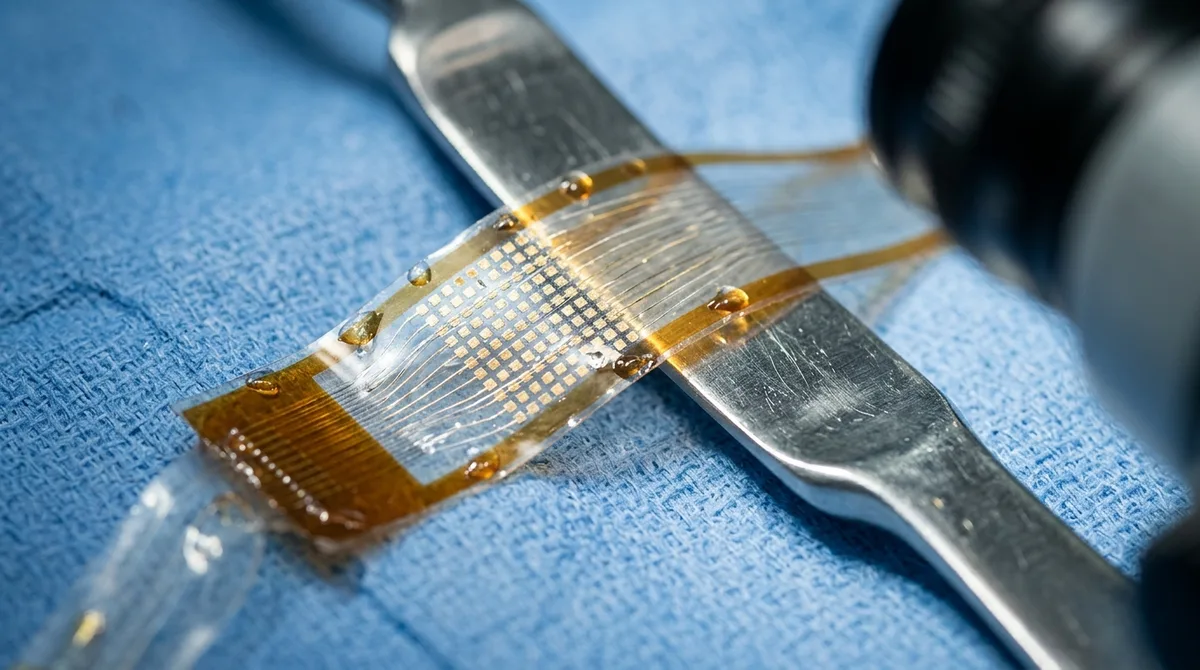
The surgical and device risks are the ones measured so far in small studies, and those results cannot be safely applied to every device. The main variable is how the hardware gets into the body. Open brain surgery involves removing part of the skull and, for many electrode designs, cutting through the dura, the tough membrane that covers the brain. Each opening carries risks of bleeding, swelling and infection, and the implant then sits in tissue that reacts to it for years.
Some companies are trying to avoid that opening. Synchron says its Stentrode is delivered through a blood vessel rather than through open brain surgery, which changes the risk profile. The concerns shift from the skull opening toward risks specific to working inside blood vessels. In June 2026, Neuralink reported its first transdural procedure in trials, in which it inserted electrode threads through the dura and left the dura intact. Whether that approach lowers infection or bleeding risk depends on follow-up data that a single announcement cannot provide.
The best-documented safety record comes from the 2023 BrainGate analysis of 14 adults implanted between 2004 and 2021. It recorded 68 device-related adverse events, six of them serious, but no device-related explantations, deaths, intracranial infections or permanent increases in disability. Those results are reassuring, yet fourteen people is a very small group, and they used one system. A clean record for one device does not predict how another will perform.
Long-term support matters as much as the operation. Explantation, the surgical removal of a device, is another procedure with its own risks, and some implants may be hard to remove once tissue has grown around them. Device failure raises practical questions too: who repairs or replaces the hardware, and what happens to your function if it stops working.
Before you consider any trial, ask for the serious adverse event count, how the team responded to each event, and the written plan for removal and support after the study ends.
What Happens to Your Brain Data?
Your brain data is the record of neural activity that an implant reads, and no single law protects it everywhere. Protection depends on where the data is collected, who collects it and what kind of information it reveals.
Five protection gaps remain for implanted brain-computer interface data. Two of them are consent and misuse. Consent is often conflated, so one form may cover treatment, research and data sharing without separating them. Safeguards against misuse are limited, and ownership of the recordings is often unclear, leaving you unsure whether the study team, the sponsor or you hold them.
Conventional de-identification, which strips out names and other identifiers, may not be enough for neural signals. Patterns in those signals can reveal intent or mental state, so removing your name does not necessarily hide what you were planning or feeling.
The OECD Recommendation on Responsible Innovation in Neurotechnology, adopted in 2019, asks governments and developers to safeguard personal brain data and to anticipate misuse before it happens. In November 2025, UNESCO adopted its Recommendation on the Ethics of Neurotechnology, which calls for explicit consent and warns against non-therapeutic use of neurotechnology on children and against workplace monitoring.
Legal coverage is also uneven. In the United States, HIPAA protects health information held by healthcare providers, insurers and their business partners, so hospital records may fall under it while a company’s app may not. In the European Union, GDPR treats health-related data as a special category with stricter rules, but its reach depends on who processes the data and why.
Before you agree to a study, ask for a written data plan. It should say who stores the recordings, where they are kept, how long they are retained, whether they can be shared or used to train software, and whether you can have them deleted if you withdraw.
Who Pays for a Brain Implant and What If You Withdraw?

Trial participation is usually free, but “free” does not mean you carry no obligations. Neuralink says its current trial participants receive the study device, the procedure, care and covered travel at no financial cost, while its devices remain investigational. Those terms belong to one study at one point in time, so confirm them in the consent documents for the specific trial you are considering.
Pricing rules are only part of the picture. Ask who pays if a complication needs a second operation years later, who covers the travel and tests required during follow-up, and whether your health insurer will cover care for a device that a study supplied.
Withdrawal deserves the same scrutiny. Ask whether you can leave the study at any time without losing care you would otherwise receive. Then ask what happens to the implant if you leave: whether it will be removed, who will perform the surgery and who will bear its cost.
The hardest question is what happens to the device, your data and your care if the company stops operating or the trial ends. A credible written answer names who would take over support, who would remove the hardware if needed and how long records are kept. A general promise to look after participants is not a plan.
Finally, because no implanted brain-computer interface is approved, a quoted price gives you no reliable benchmark for value. Treat any offer to sell an elective brain implant with suspicion, especially one framed as enhancement rather than treatment for a diagnosed condition.
Weighing a Brain Implant Decision Step by Step
Start by checking the regulatory status. Ask the sponsor or clinic whether the device is investigational, approved, or offered only as an elective service, and ask for the answer in writing. Then read the consent form and the data terms line by line, looking for whether treatment, research and data sharing are kept separate.
Next, compare each trial’s risks with its follow-up commitment. Find out how many visits are required, how long they last, and who pays for travel, complications and removal. Place company announcements beside peer-reviewed papers and independent reports, and treat a company’s own enrollment or milestone figures as claims to verify.
Finally, take your questions to a neurologist or neurosurgeon who has no stake in the sponsor, and to a research ethics committee or hospital bioethics service. Use the OECD and UNESCO principles as a checklist. Ask how the team assesses safety, protects brain data, includes people fairly and anticipates misuse. Write down every answer, because a vague answer tells you something too.
Building Your Own Trial Comparison Page
Start by choosing one specific study and getting its consent documents. Then read the Neuralink PRIME Study brochure, which describes a primary study of about 18 months followed by five years of follow-up with 20 visits. Mark each visit on your own calendar and note the travel, time off work and test appointments each one would require from you.
Next, find the withdrawal clause and copy its exact wording. Confirm whether leaving the study means you keep the care you would otherwise receive, and who would pay to remove the implant if you stopped.
Then build a one-page comparison of two or three trials. For each one, list the number of serious adverse events reported, the total number of participants, the length of follow-up, and whether the data terms allow your recordings to be shared or used to train software. If a sponsor leaves a row blank or answers vaguely, record that gap, because it is useful information.
Finally, book a consultation with a neurologist who has no ties to the sponsor, and bring that page with you. Ask the neurologist to explain the surgical approach in plain terms, and to say whether a less invasive option could meet your goal. Do not sign anything until every row on your page has an answer you can understand.
Frequently Asked Questions
1. Can healthy people volunteer for a brain implant trial?
Most current implanted brain-computer interface trials are not designed for healthy volunteers. FDA guidance frames these devices as neuroprostheses meant to restore lost motor or sensory abilities in people with paralysis or amputation, so current studies recruit from that group. Each study sets its own eligibility criteria in its consent documents, so check those before assuming you qualify.
2. How can I check whether a brain implant trial is recruiting near me?
Search a public trial registry such as ClinicalTrials.gov using terms like brain-computer interface, implant or neuroprosthesis, then filter by your country or city. Check the sponsor’s own website as well, since company trial pages often list current sites and enrollment status. A listing shows only that a study is recruiting, so confirm that the device is investigational and that the study has IRB review and a written consent process before you travel for screening.
3. Can an employer or school require someone to use a neurotechnology device?
The UNESCO Recommendation on the Ethics of Neurotechnology, adopted in November 2025, warns against workplace monitoring with neurotechnology and against non-therapeutic use on children. Those warnings show that international standards treat pressure to use a brain device outside a therapeutic purpose as an ethical red flag. Whether a particular employer or school may legally demand one depends on local law, and no implanted brain-computer interface is approved for general use.
4. Are cochlear implants and deep brain stimulation covered by insurance, and how does that differ from experimental devices?
Cochlear implants and deep brain stimulation are established treatments, so they are generally billed through the normal insurance pathways that cover medically indicated care, subject to your plan’s rules and approval requirements. Experimental brain-computer interfaces work differently, because their costs are set by each study’s terms. Neuralink says its current trial participants receive the device, procedure, care and covered travel at no cost, but that describes one study, so ask your plan and the study team in writing before you enroll.