
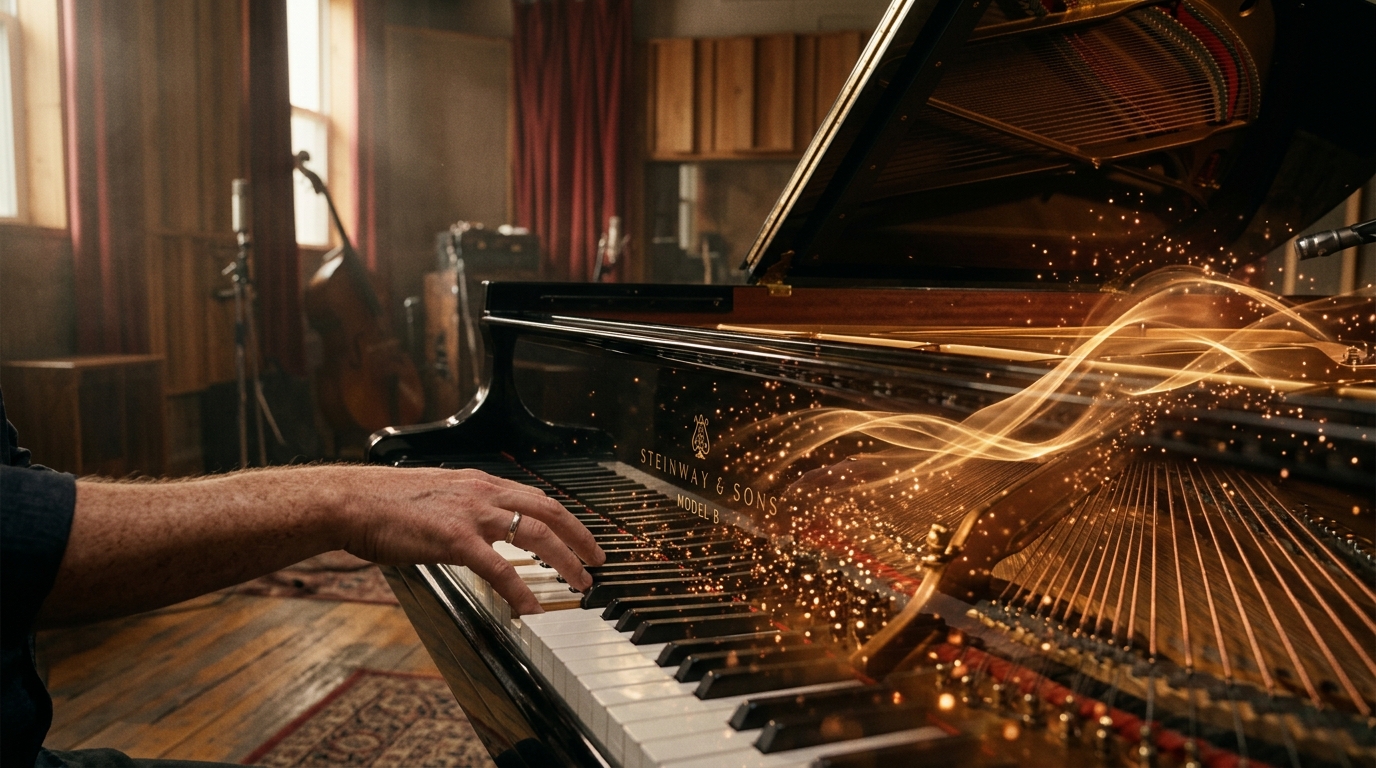
Have you ever wondered why a simple sequence of notes can make you feel a profound sense of longing or triumph, even though music has no words or face? This mystery lies at the heart of the metaphysics of musical expression, a field that explores whether music actually contains emotion or if it simply mirrors the rhythms of our own physical gestures. While we once relied on the idea that melodies resemble human cries or laughter, modern perspectives are shifting toward how we actively co-create meaning with the sounds we hear.
As you listen to your favorite track today, you aren’t just a passive recipient of data; you are engaging in a sophisticated philosophical event. Recent breakthroughs in enactivist theory and technology integration suggest that musical expression is less about a static message and more about a dynamic, cross-cultural interaction between the listener and the medium. By re-examining these fundamental structures, you can begin to see music not just as entertainment, but as an essential window into the nature of human consciousness and connection.
Key Takeaways
- Music expresses emotion through Resemblance Theory, where sonic patterns like tempo and pitch mimic the physical contours of human gestures and speech.
- Musical meaning is not a static message but an enactive process where the listener’s biological responses and physical presence co-create the experience in real time.
- The ‘Sonic Mirror’ effect allows melodies to externalize non-verbal truths, reflecting the internal movements of the soul and the structural dynamics of human consciousness.
- Understanding music as a Wittgensteinian simile reveals that its meaning is inseparable from its expression, functioning as a direct bridge to truths that bypass intellectual and literal language.
Resemblance Theory And The Sonic Mirror
When you listen to a soaring violin solo or a heavy, descending bass line, you are participating in a profound metaphysical exchange known as Resemblance Theory. This perspective suggests that music expresses emotion by mimicking the physical contours of human experience, such as the way a sad person speaks in a low, slow drone or an excited person moves with jagged, rapid energy. You perceive these sonic patterns as a mirror of human behavior, allowing abstract sounds to carry the weight of real psychological states. By mapping the tempo and rhythm of a song onto the biological pace of your own body, the music stops being just noise and starts feeling like a living entity.
The rise and fall of a melody acts as a sonic mirror for your inner psychological life, reflecting the very structure of your soul’s movements. As a melody climbs toward a high note, you might feel a sense of striving or tension that mirrors your own experiences of ambition or effort. When the music finally resolves into a harmonious chord, it provides a metaphysical release that parallels the way you feel when a long-standing problem is finally solved. This mirroring effect suggests that the auditory reality of music is not separate from you, but is instead an externalization of your deepest, non-verbal truths.
Understanding this connection helps you see music as more than just entertainment; it is a sophisticated tool for exploring the nature of reality. While traditional views focus on how sounds resemble physical gestures, you can also view these sonic structures as direct conduits to emotions that words often fail to capture. The way a rhythm drives forward or a harmony lingers in suspension offers a map of the human condition that bypasses the intellect and speaks directly to the spirit. By engaging with these patterns, you are not just listening to a performance, but are witnessing a reflection of the fundamental dynamics that define your conscious existence.
Enactivist Philosophy And The Embodied Listener

When you listen to a haunting melody or a driving rhythm, you are not just a passive observer of sound waves. Modern enactivist philosophy suggests that musical meaning is something you actively create through your physical presence and biological participation. Instead of searching for an abstract emotion hidden within the notes, you should recognize that the music becomes expressive because your body reacts to it in real time. Your heart rate might sync with a percussion line, or your muscles might tense during a dissonant chord, proving that the reality of the music is found in this visceral, lived interaction.
This perspective shifts the focus away from the structural resemblance of a song to human speech and places it squarely on your personal, bodily engagement. You are enacting the music through your movements and internal physiological shifts, making the experience a collaborative event between the sound and your physical self. We have come to understand that auditory reality is not a distant object to be studied, but a dynamic process that requires your active involvement to exist. This means that the profound philosophy of emotion found in non-verbal sounds is actually grounded in how your body interprets and responds to every vibration.
By viewing music through this lens, you can see how it serves as a bridge between the physical world and the deepest layers of human consciousness. You are not simply hearing a story told by an instrument, but rather you are living that story through the way your nervous system processes the tension and release of the composition. This approach honors the complexity of your sensory experience while maintaining a rigorous understanding of how sound shapes our perception of existence. Ultimately, the metaphysics of music reveals that you are an essential component of the art, transforming simple frequencies into a meaningful reality through your own embodied existence.
Beyond Information To The Wittgensteinian Simile
When you listen to a haunting cello suite or a soaring orchestral crescendo, you are not simply receiving a data report about sadness or joy. Traditional models often suggest that music informs you of an emotion by mimicking human speech or physical gestures, but this perspective misses the deeper metaphysical connection at play. Instead of music acting as a messenger that delivers information from a distance, it functions as a bridge that allows for a mutual tuning in between your consciousness and the sound. You are not just observing a representation of a feeling, you are participating in a shared resonance that transcends the boundary between the subject and the object.
This shift toward a Wittgensteinian simile suggests that music is less like a description and more like a smile or a cry, where the meaning is inseparable from the expression itself. You do not need a dictionary to translate a melody because the music speaks a unique language that conveys philosophical depth without the limitations of literal words. By moving beyond the idea of music as a set of informative signals, you begin to see it as an enactive experience where the truth of the work is lived in real time. This auditory reality allows you to grasp complex truths about the nature of existence that would be impossible to capture in a standard conversation.
As you engage with these non-verbal sounds, you realize that musical expression creates a profound space for shared understanding that bypasses intellectual analysis. This experience suggests that the fundamental nature of reality might be more about vibration and relationship than static facts or definitions. When you find yourself moved by a particular chord progression, you are experiencing a form of philosophical insight that is direct and immediate. By exploring the phenomenology of perception through these sounds, you move away from seeing music as a mere decoration of life and start to recognize it as a vital way of knowing the world and yourself.
The Auditory Reality of Your Musical Experience
Exploring the metaphysics of musical expression invites you to see the world not just as a collection of objects, but as a vibrant field of auditory reality. When you listen to a haunting melody or a triumphant crescendo, you are engaging with a profound philosophical truth that transcends the need for spoken words. This perspective shifts your role from a passive listener to an active participant who helps breathe life into the soundscapes you encounter. By recognizing that music functions as a bridge between abstract vibrations and deep human feeling, you gain a deeper appreciation for how we communicate the inexpressible.
This journey into the nature of sound reinforces the idea that human connection is built on more than just literal definitions. You are now equipped to understand how structural elements like rhythm and contour mirror the nuances of our internal lives and physical gestures. As you observe the evolution of modern music and technology, your ability to discern individual expression within these complex frameworks establishes you as a thoughtful observer of the arts. Ultimately, the metaphysics of expression reminds you that every note is an invitation to explore the shared depths of the human experience through the unique lens of sound.
Frequently Asked Questions
1. What exactly is the metaphysics of musical expression?
It is the study of how abstract sounds can possess or convey emotional meaning without using words or visual cues. You are exploring the fundamental nature of how a melody transforms from simple vibrations into a profound psychological experience.
2. How does music manage to sound sad or happy without saying a word?
This happens through Resemblance Theory, where you recognize sonic patterns that mimic human physical behavior. When a melody moves slowly or drops in pitch, your brain maps those sounds onto the way a person speaks or moves when they are feeling down.
3. Am I just a passive listener when I put on my headphones?
You are actually an active participant in a sophisticated philosophical event known as co-creation. You bring your own consciousness and history to the music, working alongside the composer to generate meaning in real time.
4. What is the Sonic Mirror and how does it affect me?
The Sonic Mirror is the idea that the rise and fall of a melody reflects the internal movements of your own soul. As you listen, you perceive the music as a living entity that matches the biological pace and psychological structure of your inner life.
5. Does my cultural background change how I perceive musical expression?
While some responses to rhythm and tempo are universal, your specific cultural context acts as a lens for interpretation. Modern enactivist theory suggests that expression is a dynamic interaction between your personal heritage and the medium itself.
6. How do new technologies change our understanding of musical metaphysics?
Technological integration suggests that musical expression is becoming less about a static message and more about a fluid, evolving interaction. These breakthroughs help you see music as a window into human consciousness rather than just a fixed piece of entertainment.
7. Why is it important to understand the philosophy behind the music I love?
Grasping these concepts allows you to move beyond passive consumption and engage with art on a deeper level. It transforms your daily listening into a tool for understanding human connection and the very nature of your own existence.