
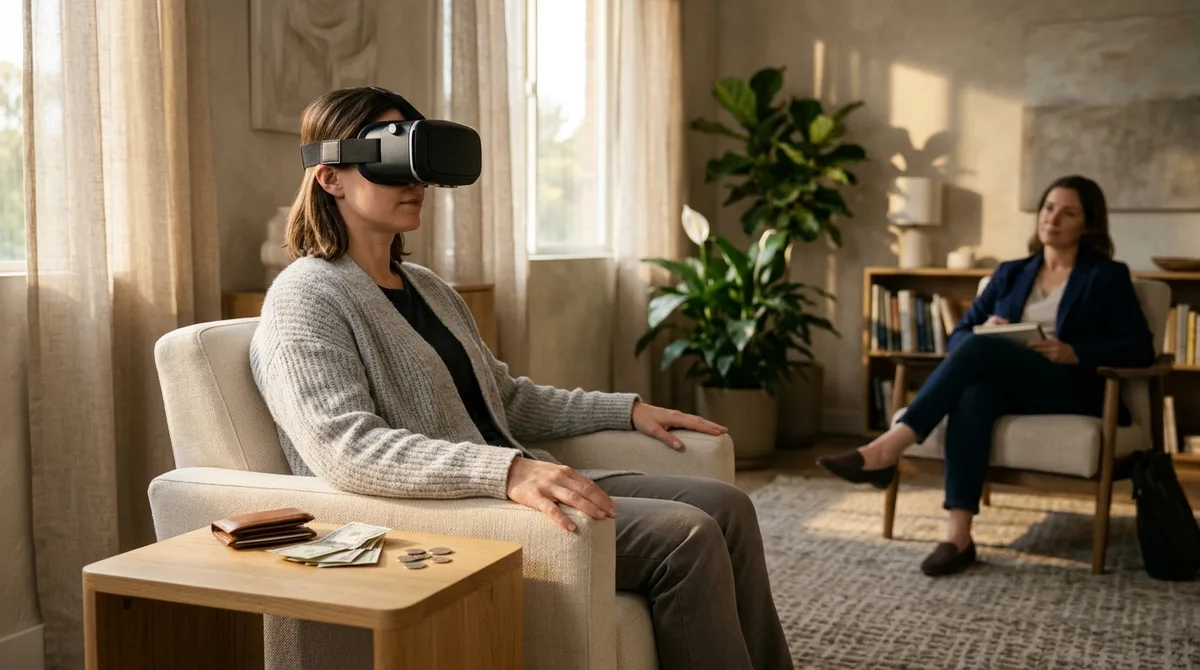
Virtual reality therapy typically costs between $135 and $350 per session at published U.S. clinic rates, though no single standard price exists. Individual providers set these figures, and they may or may not include the headset, the initial assessment, or any insurance reimbursement. Because treatment usually involves several sessions, the total bill can grow, so the price per visit is only the starting point when you compare options.
For context, the Health Care Cost Institute reported an average price of $125 for a 60-minute psychotherapy session in 2022, so it helps to compare like with like.
Key Takeaways
- Clients with PPO plans may qualify for 60% to 80% reimbursement once their deductible is met.
- Exposure software licensing alone can reach $3,000 to $3,600, so clinic overhead can climb into the thousands.
- Cybersickness may cut a session short, so you could pay for time you cannot fully use.
- Feasibility trials show whether VR can run in practice, but they cannot settle long-term cost-effectiveness.
How Much Does Virtual Reality Therapy Cost per Session?
Each published rate reflects one provider’s pricing rather than a national average, so a single quote tells you little about the market as a whole.
Session length is one of the biggest drivers of cost. Some clinics charge about $135 for a 45-minute session and about $180 for a 60-minute session. Individual sessions at some New York programs run $175 to $300, while a six-session package there runs $1,050 to $1,650, so bundling can shift the total considerably. Some providers also charge around $270 for an initial 90-minute assessment, a cost you may face before treatment begins.
Before you compare quotes, check what each one includes. A price may or may not cover the headset, the assessment, or any insurance reimbursement, so ask the provider to list every charge you will pay.
How Does VR Therapy Work and What Does It Treat?
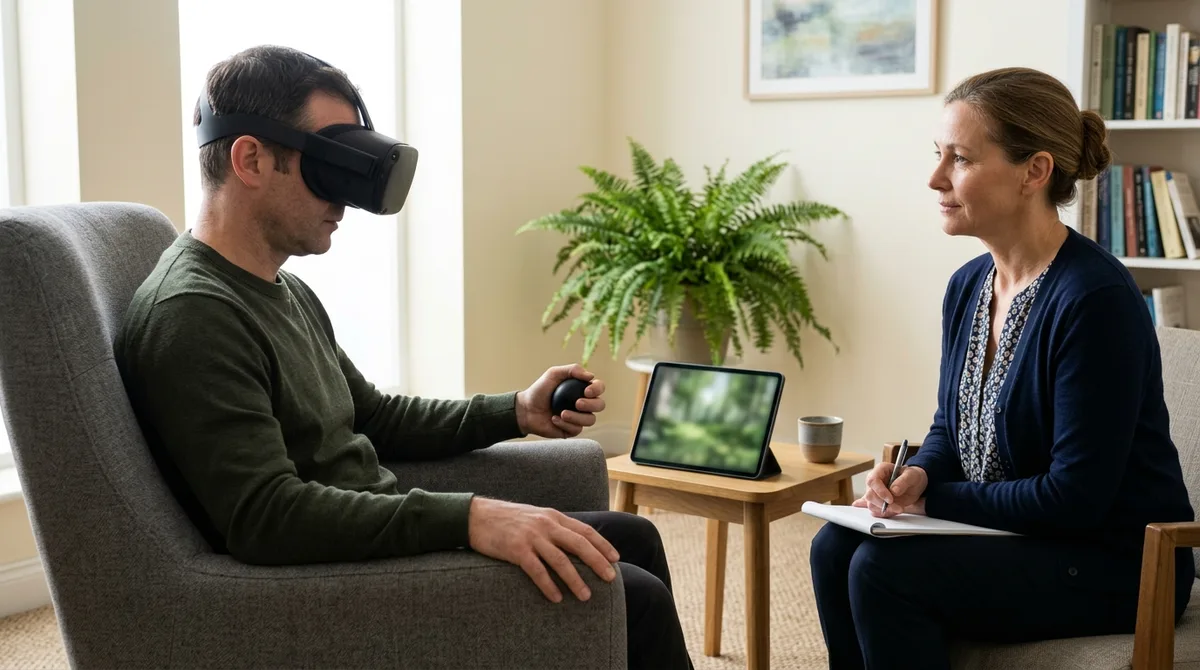
Virtual reality therapy places you inside controlled virtual scenes, such as a high balcony or an airplane cabin, so you can face a feared situation in small, gradual steps. This immersive exposure builds on cognitive behavioral therapy (CBT), which holds that avoiding a fear keeps it alive, while repeated, structured exposure helps you learn that the situation is manageable. Many VR programs build these CBT principles directly into their scenes and exercises. Conditions treated this way include specific phobias such as fear of heights or flying, along with PTSD, anxiety, and chronic pain. The Substance Abuse and Mental Health Services Administration defines digital therapeutics as health software designed to treat a condition through a medical intervention, and it notes that these tools can be delivered through VR headsets. That definition helps explain the price. You are paying for a structured therapeutic program delivered through the hardware, not for the headset alone.
How Many Sessions Will You Need, and What Does That Add Up To?
Most people who try VR therapy need several sessions, and the total depends on the condition and the program. In one randomized controlled trial for fear of heights, participants completed about six 30-minute sessions, given two to three times a week over two weeks. Many established programs run longer, with 8 to 12 sessions of 45 to 75 minutes each. For fear of flying, a typical course averages about eight sessions.
To estimate your real cost, multiply the session rate by the number of sessions you expect, then add any assessment fee. At $200 per session, eight sessions come to $1,600 before the assessment, and a twelve-session plan at the same rate reaches $2,400. Those totals can sit well above the headline price of a single visit.
Ask each provider how many sessions its protocol usually requires for your condition. That answer will shape your budget more than any single rate, and it lets you compare programs on the same number of sessions.
How Does the Price Compare With Traditional Talk Therapy?

Traditional talk therapy generally costs less per visit than published VR rates, but the two figures measure different things. The average price of a 60-minute psychotherapy session was $125 in 2022, up from $114 in 2018. That is a general average across psychotherapy as a whole, not a VR-specific price, so it shows the scale of the market rather than a like-for-like comparison.
A 2025 brief offers a broader view of spending. It found that in 2022, people with employer-sponsored insurance who used therapy averaged 13 visits and $1,801 in total therapy spending. Of that total, those insured users paid an average of $395 out of pocket.
Use these numbers as a sense of scale rather than a direct benchmark. Your own course of VR sessions may land above or below these averages, depending on the number of sessions, your plan, and the provider’s pricing.
Does Insurance Cover VR Therapy, and What About Medicare?
Whether insurance covers VR therapy depends on the provider, your plan, and how the session is billed, so there is no single answer. Some providers say they do not accept insurance for VR sessions. Others accept major insurers such as Aetna and United Healthcare, and clients with PPO plans may be eligible for 60% to 80% reimbursement once the deductible is met.
Billing structure can change the outcome. Washington State’s 2026 workers’ compensation policy treats clinical VR as bundled into the therapy service and not separately payable, so a claim there covers the therapy fee rather than a separate VR charge. Medicare coverage likewise depends on how the service is billed and on the specific plan, so confirm the details with your plan before you book.
Regulatory status matters too. The U.S. Food and Drug Administration authorized EaseVRx, a VR system built on CBT principles for chronic pain, for prescription use only under 21 CFR 801.109. Ask your plan whether the provider is in network, whether the VR sessions are billed separately or included in the therapy fee, and whether your deductible applies.
What Do Headsets, Software, and Training Add to the Bill?
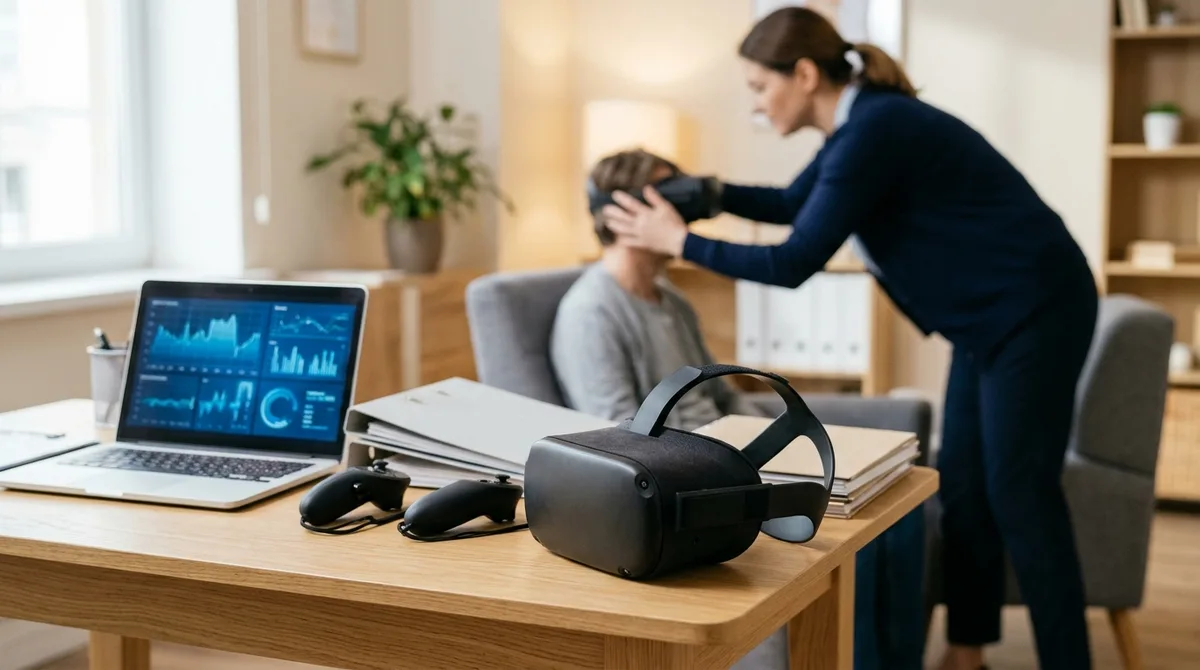
Software, headsets, and training all add to a clinic’s overhead, and some of that cost can show up in the rate you pay. A 2023 research commentary reported that VR exposure software licensing ranged from $3,000 for a single-user perpetual license to $3,600 for an annual subscription, so a provider’s software expense can reach the thousands before its first client arrives.
Headset prices are another factor, and no reliable national figure exists for them. Ask each clinic whether it passes the hardware cost on to clients. Clinicians also need training in the software and the treatment protocol, and the time spent setting up equipment before each session is overhead that providers may reflect in their session rates.
Before you book, ask whether equipment costs are built into the session fee or billed separately. If they are included, the rate already covers the hardware. If they are not, expect an extra line on the invoice.
What Costs Don’t Appear on the Price List?
Several costs never appear on a price list, and they can change what VR therapy is really worth to you. Cybersickness, which can bring nausea or dizziness, may interrupt or limit a session, so you could pay for time you cannot fully use.
Headsets can also collect health information, which makes privacy a question to raise early. Ask whether the provider follows health privacy rules, and how any recordings or session data are stored and shared.
Access is another hidden cost. Rural and low-income clients may face long drives, few nearby clinics, or limited equipment, and the travel and missed work can add up quickly.
Telehealth can ease some of that burden, but it changes both the setup and the total cost of care, since you need suitable hardware and a private space at home. A 2026 feasibility trial compared remote VR exposure therapy for specific phobia with standard telehealth over 12 weekly sessions across three months.
Is the Evidence Strong Enough to Justify the Price?
The evidence is not yet strong enough to settle the question, and experts disagree about whether VR earns its higher price. Feasibility trials test whether an approach can be run in practice, such as whether people stay engaged and whether sessions can be scheduled reliably. They cannot settle long-term cost-effectiveness, because their purpose is to test practicality rather than lasting outcomes weighed against lasting expense.
Some clinicians argue that VR adds value beyond conventional exposure therapy, since a realistic scene can make a feared situation easier to rehearse. Others counter that standard exposure therapy already works well and that the headset mostly adds cost. Articles on Philosopedia aim to explain disagreements like this one rather than give a single verdict when several serious answers exist.
Looking ahead, prescription digital tools may become more widely used. Researchers will still need more studies that track both price and patient outcomes before the comparison becomes clear.
Weighing the Price Against Your Own Goals
Before you commit, ask each provider for an itemized breakdown that lists the session length, the package size, the initial assessment, and how insurance billing works. Line those figures up against traditional talk therapy quoted for the same number of sessions, so you compare total costs rather than headline rates.
Philosopedia is a publication that informs readers through its articles and educational content. It explains the debate over VR therapy and does not provide or sell therapy, so the choice of provider remains yours.
Comparing Written Estimates Side by Side
Start by writing down your goal in one sentence, such as overcoming a fear of flying or easing chronic pain. Then ask two or three providers for a written estimate that covers the same number of sessions, the same session length, and the same insurance terms. Compare those totals with a traditional cognitive behavioral therapist quoted for the identical course. Ask each provider whether the VR scenes are essential to your goal or simply an added option.
Before you decide, read Philosopedia’s articles on exposure treatment and the ideas behind it. Bring the questions you form there back to your providers, and let your answers guide the choice.
Frequently Asked Questions
1. Can I use VR therapy at home, and how would that be priced?
Published rates in this article are all for clinic-based sessions, so no separate price for at-home use is listed. Each provider sets its own terms, so ask whether a home program is offered, whether it is billed per session or as a flat fee, and whether you must buy or rent the equipment yourself.
2. What happens to my money if I stop VR therapy after only a few sessions?
Refund terms for unused sessions depend entirely on each provider’s policy, so there is no universal rule. Before paying for a package, ask in writing whether it is refundable, whether unused sessions can be transferred or applied to another service, and whether missed appointments are still charged.
3. Do children and teenagers pay different rates for VR therapy?
The published clinic rates do not list separate pricing for minors, so there is no set figure for younger clients. Ask each provider whether youth sessions cost the same, whether the initial assessment is priced differently for a minor, and whether a parent or guardian needs to attend.