
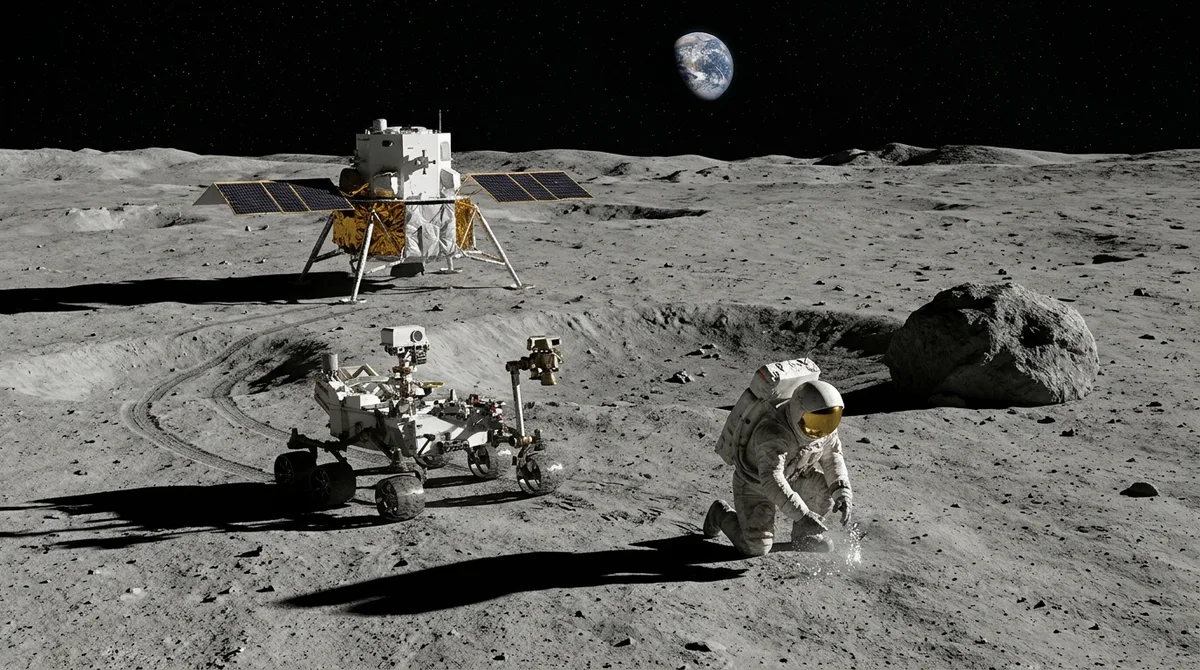
Space exploration ethics in 2026 asks how humans should behave beyond Earth, who gets to make the rules, and who carries the risks as governments, scientists, and private companies all head for the Moon. The stakes are concrete. The 1967 Outer Space Treaty bars any nation from claiming the Moon or other celestial bodies through sovereignty, use, or occupation. Yet U.S. law, under 51 U.S.C. § 51303, lets American citizens who commercially recover a space resource possess, own, and sell it, as long as they act within applicable law and international obligations. These two rules pull in different directions, and that tension sits at the center of the debate.
The money and the people involved are changing quickly. NASA’s CLPS 2 framework sets a ten-year maximum of $10 billion for lunar delivery work, and in March 2026 NASA awarded Intuitive Machines $180.4 million to deliver seven science and technology payloads to the lunar South Pole region. Most of this activity concerns delivery, experiments, and demonstrations rather than mining, but these early contracts shape who builds, who profits, and who answers when something goes wrong. Planetary protection, the effort to keep other worlds and Earth free from harmful contamination, adds another layer of responsibility. Asking these questions before the hardware is in place is what turns space ethics from science fiction into a practical concern.
Key Takeaways
- You should recognize that U.S. law under 51 U.S.C. § 51303 lets American citizens who commercially recover a space resource possess, own, and sell it, but only within applicable law and U.S. international obligations.
- Article VI of the Outer Space Treaty makes states internationally responsible for national space activities, including those carried out by private companies, so you should ask which state authorizes and supervises a company’s conduct.
- The Committee on Space Research’s 2026 guidance finds that one-way lunar missions face no technical planetary-protection constraints, while missions to lunar polar and permanently shadowed regions require more thorough documentation and organic inventories.
- The Artemis Accords state that extracting space resources does not inherently amount to national appropriation under Article II of the Outer Space Treaty, yet the Accords are principles among their signatories rather than a global property settlement that you can rely on to settle ownership.
What Does Space Exploration Ethics Ask in 2026?
Space exploration ethics asks how people should behave beyond Earth, who gets to decide the rules, and who carries the risks. It covers ownership of land and materials, protection of other worlds, safety for crews and bystanders, and fairness among nations and across generations. Ethics here means reasoning about what is right and what we owe to others, not simply what is permitted.
Four terms do most of the work. A space resource is a useful material found in its natural state in space, such as water ice or minerals, and U.S. law explicitly includes both. Planetary protection is the effort to prevent harmful contamination in both directions, so that Earth and other worlds stay safe. Law is the set of rules that governments write and enforce, while ethics asks whether those rules, and the actions they allow, are right.
That separation matters because a legal permission does not settle whether an action is morally right. A rule can allow something while still ignoring the interests of people who had no voice in writing it, including future generations and nations without launch capacity. Lawfulness is the starting point for the debate, not its conclusion.
The 2026 lunar program is built on NASA contracts with private companies, and its focus is delivery, science, and technology demonstrations rather than mining. Under the Commercial Lunar Payload Services (CLPS) framework, companies carry instruments to the surface. The CLPS 1 contract ceiling rose from $2.6 billion to $4.2 billion, with deliveries allowed through November 2033. NASA also awarded Blue Origin a $94 million base contract, with a performance-based option worth an additional $140 million, to deliver the PROMISE rover to the lunar South Pole.
Timing is shifting too. NASA’s May 26, 2026 release targeted Moon Base I, using Blue Origin’s Blue Moon Mark 1 Endurance lander, for launch no earlier than fall 2026.
Yet NASA’s launch-schedule page now lists the Blue Origin Blue Moon Mark 1 Moon Base mission for 2027. Such slips matter for ethics, because public promises, contract dates, and physical hardware are not the same thing, and accountability depends on which one you are watching.
Who decides ties these threads together. Article VI of the Outer Space Treaty makes states internationally responsible for national activities, including those of private companies, and requires authorization and continuing supervision. Planetary protection adds a technical layer. The Committee on Space Research’s 2026 guidance says one-way lunar missions face no technical planetary-protection constraints, but missions to lunar polar and permanently shadowed regions need more thorough documentation and organic inventories.
Who Owns the Moon? Sovereignty, Terra Nullius, and Colonialism
Terra nullius is a Latin phrase meaning “land belonging to no one.” It was a legal idea that European powers used to justify claiming territories they judged empty, even when those lands were already home to peoples with their own governments, laws, and relationships to the soil. If the land was treated as unowned, occupying it could be presented as acquiring it. Critics argue that this logic erased the people already living there, which is why the doctrine remains a painful reference point in debates about new frontiers.
Space discussions often reuse the language of that past. Words like “discovery,” “pioneer,” and “frontier” describe the Moon as barren and unclaimed, and that framing can make the people who might be affected by off-world activity seem absent. When you hear that a world is open for development, it is worth asking who is imagined as the one doing the opening, and who is left out of the picture.
The 1967 Outer Space Treaty addresses this history directly. Its Article II states that the Moon and other celestial bodies are “not subject to national appropriation by claim of sovereignty, by means of use or occupation, or by any other means.” Few rules are clearer on sovereignty. Yet the treaty leaves open how resources may be used, and that gap is where the current debate lives.
The Artemis Accords, a set of principles agreed among their signatories rather than a global settlement, take a position on that gap. They state that extracting space resources does not inherently amount to national appropriation under Article II, and they call for public information about resource activities. Supporters see this as a workable path. Critics ask whether a principle agreed among a limited group of states can carry the weight of rights that affect everyone.
Indigenous perspectives add a different question. For many Indigenous communities on Earth, land is bound up with ancestors, sacred places, languages, and obligations that cannot be separated from the ground itself. From that view, sacred land and cultural identity are not optional considerations to be weighed against profit. Consent also matters: a claim made without the agreement of those with ancestral ties to a place is, to them, not a legitimate claim. The critical question for space planning is whether these relationships would be recognized at all, and whose voices are present when contracts, mission goals, and resource rules are decided.
Thinkers disagree about the basic picture. One view treats space as a commons, a shared inheritance that should be managed for the benefit of all humanity, much as the high seas and Antarctica are governed under international arrangements. The other treats space as a frontier open to development, where clear property rights encourage investment and where recovered resources can be used and sold under national law. Both positions are serious. They differ on whether ownership brings responsibility to others or simply the freedom to build.
Can Private Companies Own Space Resources?
Under U.S. law, an American citizen who commercially recovers a space resource may possess, own, transport, use, and sell it, but only in accordance with applicable law and U.S. international obligations. The statute, 51 U.S.C. § 51303, grants that right at home, yet it cannot settle the question on its own, because the treaties that bind the United States still apply. The result is a gap between what national law permits and what international law allows, and that gap is where the argument happens.
The Outer Space Treaty’s Article VI adds a second layer. It makes states internationally responsible for national space activities, whether carried out by government agencies or by non-governmental entities. It also requires a state to authorize private activity and to supervise it continuously. A company is therefore never outside the treaty’s reach. The question becomes which state answers for its conduct and what supervision that state actually provides.
U.S. law follows that logic. Federal agencies are directed to facilitate commercial recovery of space resources by U.S. citizens, consistent with international obligations, and that recovery remains subject to federal authorization and continuing supervision. The 2015 statute also defines a space resource as an abiotic resource in situ in outer space, and it explicitly includes water and minerals. Because the definition covers non-living material, living organisms fall outside it, which is one reason biological questions are handled separately under planetary protection.
The Artemis Accords take a clear position on the gap. They state that extracting space resources does not inherently amount to national appropriation under Article II of the Outer Space Treaty, and they call for public information about resource activities. Supporters read this as a practical way to let resource work proceed without a sovereignty claim. Yet the Accords are principles among their signatories, not a global property settlement.
Because little actual mining has begun, the debate in 2026 is mostly about precedent. The current contracts concern delivery, experiments, and demonstrations, so the rules that will govern extraction are being shaped before any large-scale recovery takes place. The first recovered samples, the first licenses, and the first disputes will show later operators how the terms are read. Lawyers and diplomats will treat early practice as evidence of what the rules mean.
For you as a reader, the useful questions are concrete. Would a recovery license be public, and would the supervising state report what was taken and where? Does the word “inherently” in the Accords mean that the scale of extraction or the purpose behind it matters? And if a company’s rights depend on its home state’s supervision, what happens when that state is weak or uninterested? Those questions show that ownership in space depends as much on oversight as on the right to take.
How Does Planetary Protection Guard Other Worlds?
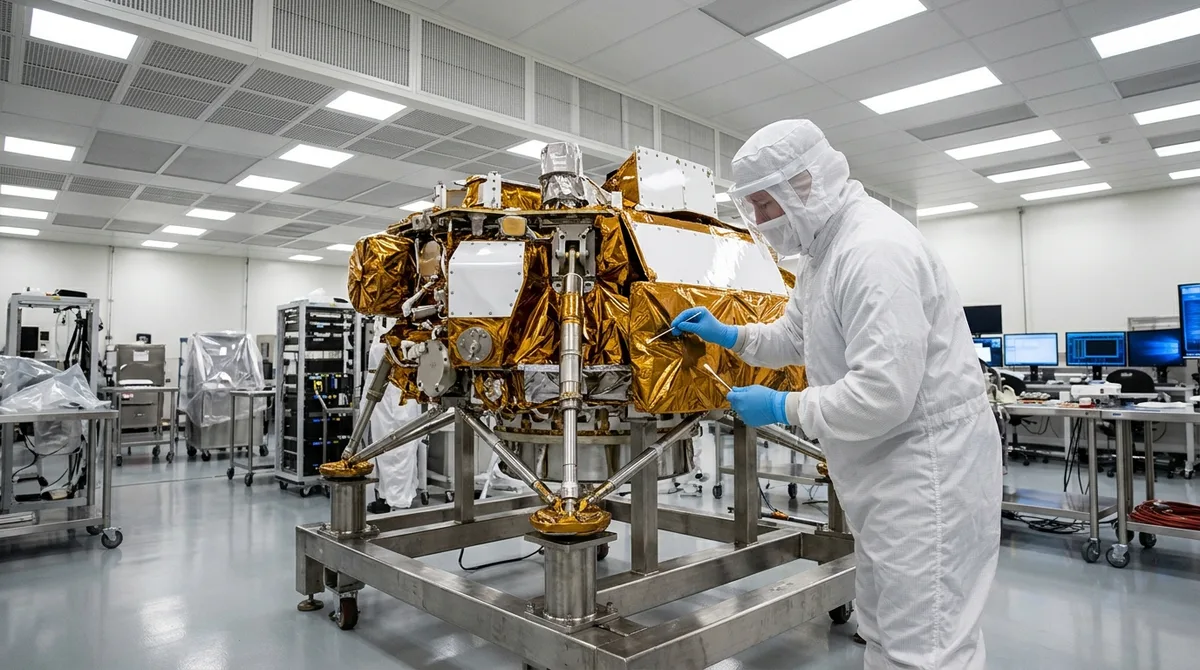
Planetary protection is the set of practices that keeps Earth and other worlds from harming each other through biological contamination. It runs in two directions. Forward contamination happens when microbes or other biological material travel from Earth to another body, where they could disturb its environment or confuse the search for native life. Backward contamination is the reverse risk, in which material brought back from another world could carry something that affects Earth’s biosphere.
These risks are not equally pressing for every mission. The 2026 guidance finds that one-way lunar missions face no technical planetary-protection constraints, and the same is true of lunar-resource sample returns. A lander that touches down and stays is not bringing material back to Earth, and no life has ever been found on the Moon. Missions to the lunar polar regions and permanently shadowed areas are treated differently. Those spots may hold water ice that has stayed cold and dark for a very long time, so the guidance asks for more thorough documentation and organic inventories, meaning records of the carbon-based compounds a mission carries and what it might leave behind.
This is where the precautionary principle enters. In its simplest form, it says that when an action risks serious harm and the harm is uncertain, you should take care before proceeding, and those who want to act should bear the burden of showing that the risk is manageable. The idea is attractive because a contaminated world is hard to clean, and a lost chance to learn whether life exists elsewhere cannot be recovered.
The principle has real strengths. It turns uncertainty into a reason for records that later scientists can check. It also protects researchers who have not yet been born, since they will need an uncontaminated site to test their ideas. Critics, however, argue that applied too broadly it can block valuable science. If every sampling plan must demonstrate zero risk, the cost may be missed discoveries, and the most cautious rule is not always the most ethical one, especially when the risk is small and the potential knowledge is large.
Why does the possibility of life carry so much weight? If microbes exist on Mars or on a moon, their discovery would be among the most significant in human history, and contamination could erase the evidence needed to recognize them. Some ethicists go further and argue that discovering extraterrestrial life would give that life a moral standing of its own, creating a reason for restraint even before anyone knows what it is like. Others doubt that a microbe would carry moral weight in the same way a sentient being does. You can accept the value of caution while still asking how much caution is justified, and for how long.
Should Humans Terraform and Settle Other Worlds?
Humans should reshape or settle another world only if they can avoid destroying life that may already exist there and avoid locking future generations into choices they cannot reverse, though thinkers disagree about whether settlement is a duty at all. Terraforming means deliberately changing a planet’s environment to make it habitable, such as thickening its atmosphere or warming its surface. The changes it causes can last far longer than any mission, so the decision is as much about future generations as about the present crew.
One argument holds that altering a lifeless world does less harm than altering a living one. If a planet has no organisms, reshaping its air or soil destroys no one’s home, and the moral weight falls mainly on the people who inherit the result. The counterargument is that we cannot yet be sure a world is lifeless. Microbes might survive in ice, deep rock, or underground channels, and a project that starts from the assumption of emptiness could erase them before anyone looks.
Settlement raises a separate question. A survival-driven mission, such as a crew stranded after a failure, responds to urgent need. An expansion-driven mission, pursued for profit, prestige, or as a hedge against disaster on Earth, asks whether its risks to people and environments are justified by goals that could wait.
Living off-world also tests the people who do it. Isolation, confinement in small habitats, and long separation from family can strain judgment and mental health. Residents depend on life support and supply chains, so a failed filter or a delayed resupply becomes a matter of survival. That dependence raises a consent issue: can someone truly agree to a multi-year mission when leaving is impossible and the risks are only partly understood?
Thinkers split on whether settlement is a moral duty or a risky luxury. Some argue that spreading human life across worlds protects the species from extinction, so the effort is a responsibility to the future. Others reply that the same money and risk could address suffering on Earth, and that settlements built on fragile technology may cost lives without guaranteeing survival.
Orbital Commons: Space Debris, Military Use, and Surveillance
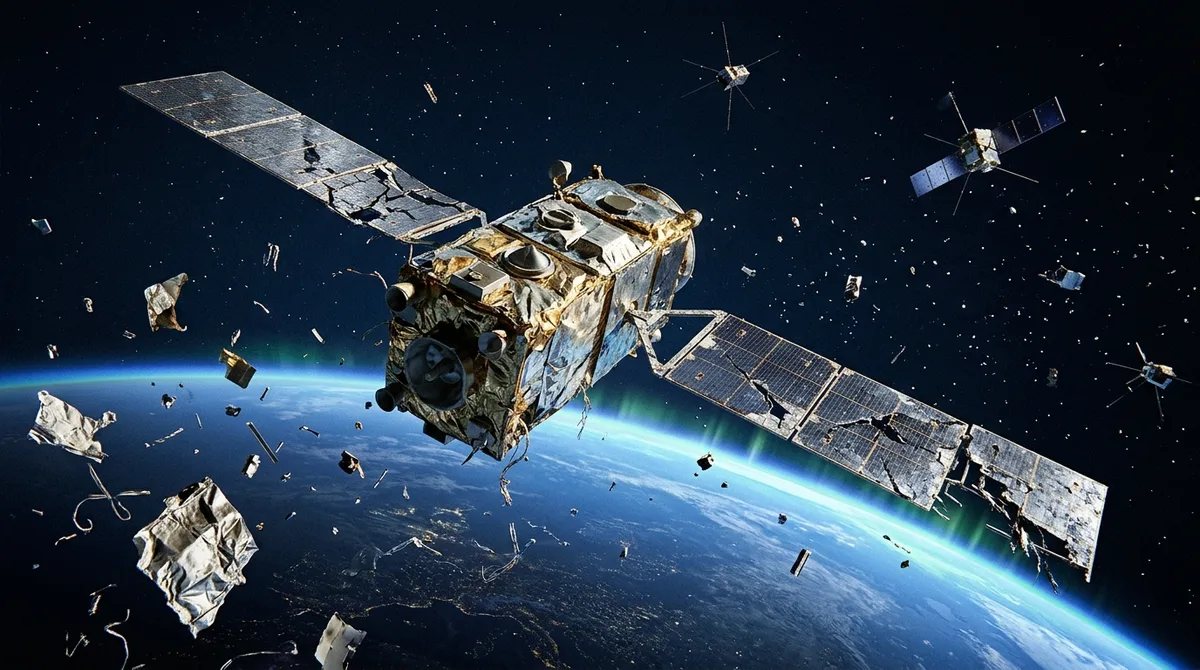
Earth orbit is a shared space in a very literal sense. Satellites, spent rocket stages, and fragments of older hardware circulate in the same bands of altitude, so a choice by one operator can change the risk faced by everyone else. Philosophers call this a commons problem, after the thought experiment in which herders each add one more animal to a shared pasture until the grass is gone.
Space debris is the clearest case. A dead satellite or rocket stage can break apart after a collision, and each fragment becomes a new projectile. In the worst scenario, known as Kessler syndrome, collisions produce debris faster than it falls back to Earth, until some orbits become too crowded to use safely. The danger lies in how small decisions accumulate. An operator that skips disposal planning saves money today but raises the risk for every later launch.
Cleanup raises the question of who pays. The operator that created a piece of debris is not always the one that suffers from it, and an owner of a working satellite has little reason to fund the removal of someone else’s wreckage. You can argue that those who benefit from using an orbit should bear the cost of keeping it usable. Others argue that governments, which control the largest space budgets, should carry most of the burden. Without an agreed answer, the commons drifts toward the outcome Hardin described.
Military use adds another layer. Satellites support navigation, communication, and early warning, so attacking one can harm an entire society rather than a single target. Supporters of a military presence in orbit argue that deterrence preserves peace, because an adversary who expects a response is less likely to attack. Critics reply that deterrence can become a spiral, in which each side builds weapons to match the other and a misread signal triggers a conflict that neither wanted.
Satellite surveillance raises a quieter question about privacy. Cameras and sensors in orbit can image farms, cities, and individual vehicles, while the people being watched never see the watcher. Is it acceptable to collect images of a neighborhood whose residents never agreed to be observed? Defenders point to disaster relief, climate monitoring, and verification of arms control. Critics respond that public benefit does not erase the loss of control over one’s own life, especially when images are stored or sold without clear limits.
These concerns share a structure. In each case, one actor’s choice shapes the risks faced by all, and no single state or company can solve the problem alone. Governance is hard because the parties who create the risk, the parties who bear it, and the parties able to enforce rules are often different groups with different interests. Which of them should hold the final say?
Is Space Spending Justified When Earth Needs Funding?
Whether space spending is justified depends less on the total budget than on what the money would otherwise do and who ends up benefiting. Thoughtful people reach different conclusions on that point, and the disagreement is worth understanding before you take a side.
The opportunity-cost argument starts from a simple fact: every public dollar spent on a lunar lander is a dollar not spent on something else, such as flood defenses, clean energy, clinics, or vaccine programs. If climate and health needs are urgent, critics argue that governments should fund them first and treat exploration as a lower priority. Defenders reply that opportunity cost works in both directions, because a country that stops investing in space may lose the instruments, facilities, and skilled workers it would need later.
The spillover argument points the other way. Technology built for space often serves life on Earth. Satellites that monitor weather systems and ocean temperatures help forecasters issue storm warnings and help scientists track how the climate is changing. Supporters argue that these benefits are real and should be counted in any honest accounting, rather than treating space work as a luxury.
The 2026 lunar awards show how the debate can be narrowed. NASA’s contracts are tied to specific deliverables, so the money follows particular hardware and results. Blue Origin’s contract to deliver the PROMISE rover to the lunar South Pole includes a $94 million base contract and a performance-based option worth an additional $140 million. Intuitive Machines’ $180.4 million covers seven payloads targeted for the same region in 2030.
That structure moves the question from “How much should we spend on space?” to “What exactly are we buying, and when will it arrive?” The more useful questions concern distribution. Who receives the weather data, and can poorer countries use it? Do the benefits reach the communities most exposed to climate risk? Does a contract deliver value to taxpayers or mainly to the companies that hold it? A modest budget can still be unfair, and a large one can still serve people well.
Who Benefits When Private Companies Fly to Space?
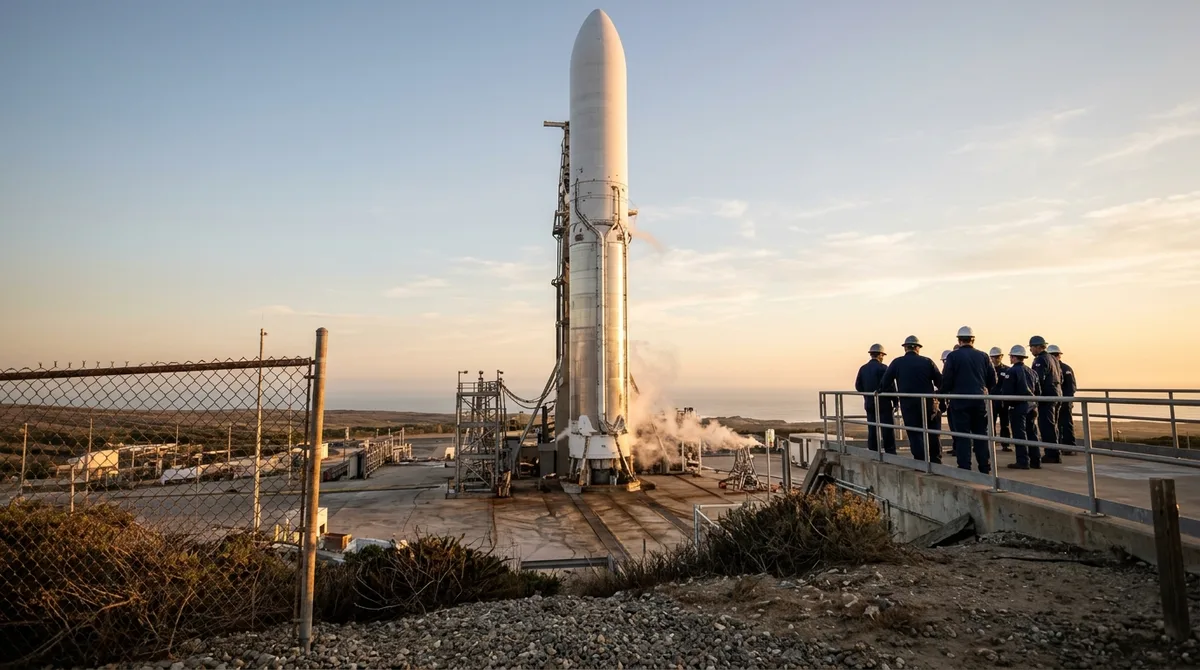
Private spaceflight mostly benefits the companies that win contracts and the customers who can pay for a seat, while taxpayers and workers often carry much of the funding and risk. The shift is real. Missions that once belonged to government agencies now often run through contracts, in which a company builds the vehicle and the agency buys a defined result, such as a delivered payload or a demonstrated technology.
Space tourism is a different case. Seats on private flights are open only to people with substantial wealth, because launch costs and company margins set the price, and no public standard governs who may fly. If tourism becomes routine, it signals a future in which the experience of space belongs mainly to those who can afford it, and the question is whether the knowledge and technology developed along the way reach everyone else.
Consent raises a sharper question. A paying passenger signs an agreement, and in principle that is informed consent, but the risks of new vehicles are still being measured, so no one can fully know them in advance. Workers face a harder version of the problem. A technician who depends on a paycheck may feel unable to refuse a risky launch schedule, so agreement given under economic pressure is weaker than it looks on paper.
Public money changes the accountability picture. When taxpayers fund a delivery, they become stakeholders, yet they rarely see how a company manages its hardware or responds to a failure. Article VI places responsibility on the state that authorizes a private actor and requires that state to supervise it. Whether that supervision works depends on practical details: whether test results and failure reports are published, whether penalties follow serious lapses, and whether smaller firms and universities can compete rather than only a few large contractors.
Should Humanity Send Messages to the Stars?
Humanity should listen before it speaks, and any decision to transmit should rest on broad public agreement rather than on a few researchers’ judgment. SETI, the Search for Extraterrestrial Intelligence, is a passive activity. Radio telescopes scan the sky for patterns that look artificial, such as narrow bands of radio energy that natural processes rarely produce. Listening reveals nothing about Earth, so its ethical questions mostly concern how results are checked, shared, and reported.
METI, or Messaging to Extraterrestrial Intelligence, reverses the direction. A deliberate transmission announces that Earth exists and may be worth finding. Supporters argue that the universe is vast, that a reply may take a very long time, and that the possibility of contact justifies the attempt. Critics reply that we know nothing about the intentions of any listener, and that a far more advanced civilization could be dangerous. Their point is not that aliens are certainly hostile, but that the downside would be severe and impossible to reverse.
Who speaks for humanity when a message goes out? No one was elected to answer that. A message sent by one research group or one government would carry the voice of a few people while claiming to represent everyone alive on Earth and everyone who will follow. Consent, in this setting, would mean that people who will live with the consequences have a real say in whether a message is sent and what it says. Representation would require including nations and communities that rarely appear in scientific or diplomatic forums.
The deeper questions concern value. If intelligent life is rare, every signal becomes precious, and careless speech could waste something irreplaceable. If it is common, the cost of silence may be higher, but the risks of speaking remain. Caution here is not only about survival. It also asks whether we respect other minds enough to avoid imposing on them, and whether we are willing to listen first.
Weighing the Ethics of Space for Yourself
Start with a habit you can use today. The next time a company announces a lunar mission, write down three things: the date it promises, the state that authorizes the mission, and the deliverable the contract pays for. Then check those details again months later. The Blue Origin mission that NASA’s May 2026 release targeted for fall 2026 now appears on NASA’s launch schedule for 2027, and tracking that kind of slip shows how much weight a public promise can carry.
Next, test your own position. If you lean toward treating space as a commons, write a short paragraph arguing for the frontier view, and the reverse. If you cannot state the strongest objection to your own view in your own words, you have not yet understood the debate.
Finally, bring your questions to the editors. The site’s contact form accepts questions, feedback, suggested topics, and corrections. When you write, say whether you are pointing out a factual error or disagreeing with an interpretation, because the two are handled differently. Suggestions are especially useful when they are specific. For example, you might propose a closer look at who should speak for humanity before a message is sent to the stars, or at how the precautionary principle should apply to polar sampling. You can also explore our articles for definitions of terms such as terra nullius and planetary protection before you return to the debate.
Frequently Asked Questions
1. Does the Outer Space Treaty ban all commercial activity on the Moon?
No. The Outer Space Treaty bars any nation from claiming the Moon through sovereignty, use, or occupation, but it does not forbid private companies from working there. Under Article VI, a state must authorize and continuously supervise the non-governmental activities it permits, so commercial work is allowed within that oversight.
2. What would a planetary protection violation look like in practice, and who would be accountable?
The most likely case is forward contamination, in which a lander or rover carries biological or organic material into a site such as a permanently shadowed region without the documentation and organic inventory that COSPAR’s guidance calls for. Under Article VI of the Outer Space Treaty, the state that authorizes the mission is internationally responsible for it, even when a private company builds and flies the hardware. Accountability would therefore depend on whether that state’s records and supervision show what was carried and what was left behind.
3. How would a fair share of space resources be defined, and who would decide?
No single definition is agreed. The Artemis Accords say resource extraction does not inherently count as national appropriation, but they do not set how benefits should be divided. Fairness could be measured by equal access, by shared benefits for countries without launch capacity, or by limits on how much any one operator may take, and each standard produces different outcomes. For now, decisions fall to national governments acting under their own laws and to the states that sign agreements such as the Accords.
4. How soon could space resources recovered from the Moon reach Earth?
No commercial recovery date is set in the current lunar contracts, which focus on delivery, experiments, and technology demonstrations rather than mining. Instruments and rovers, such as the PROMISE rover that Blue Origin is contracted to deliver to the lunar South Pole, must first prove they can operate there. Schedules have already slipped for some missions, including the Blue Moon Mark 1 launch that NASA’s launch-schedule page now lists for 2027, so recovery is likely to follow well after the first deliveries.