
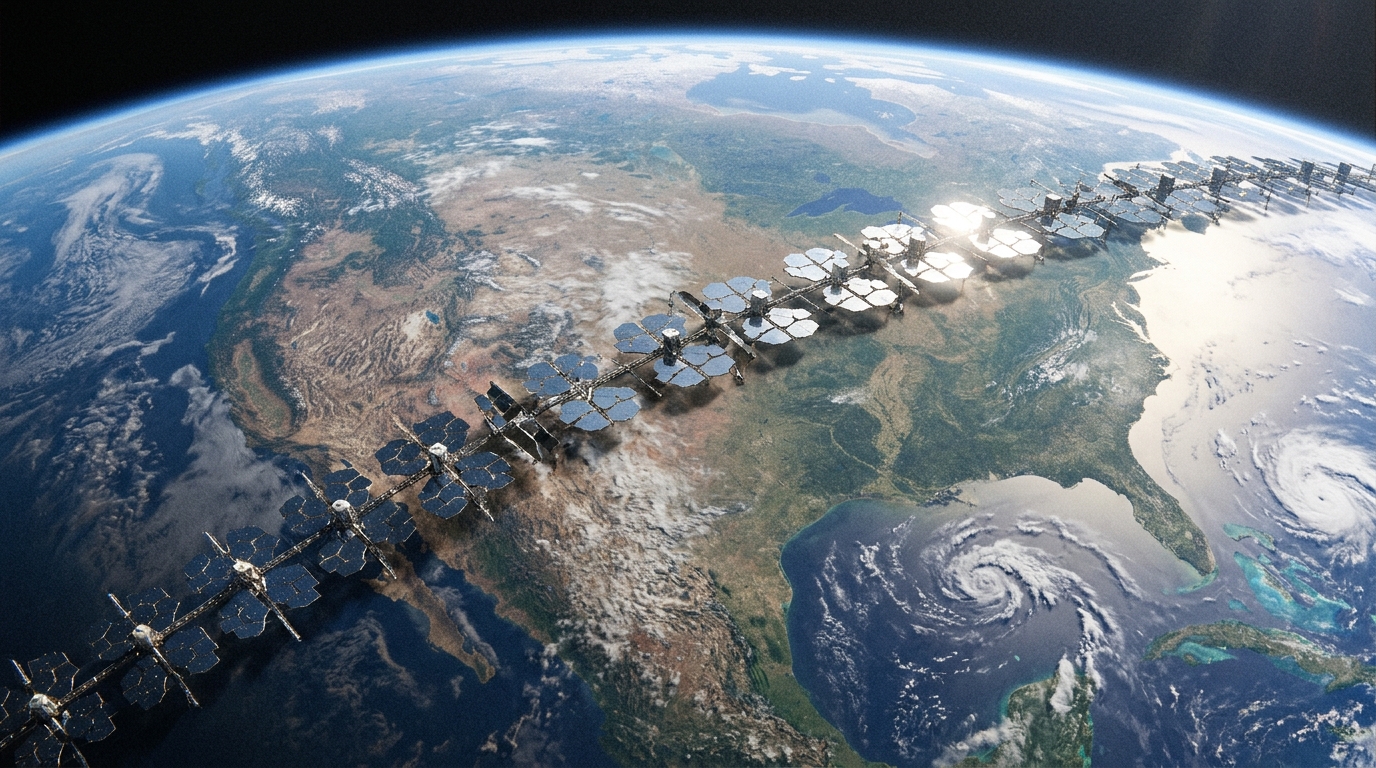
What if cooling the planet meant placing mirrors or dust clouds in space to reduce incoming sunlight? The question behind space solar geoengineering ethics is not only whether the technology could work, but who would decide, who would bear the risks, and whether anyone has the right to alter a shared atmosphere and sky. Because climate-scale systems remain speculative and undeployed, you still have a rare opportunity to examine their governance before technical momentum outruns public consent.
You also need to distinguish planetary cooling from newer orbital mirrors designed to redirect sunlight to specific places at night. Both ideas raise difficult questions about orbital pollution, astronomy, unequal impacts, accountability, and control over sunlight itself. Understanding these tensions helps you evaluate whether space-based intervention could ever be responsible or whether its risks would be too difficult to govern.
Key Takeaways
- Space-based solar geoengineering remains speculative and undeployed; technical feasibility does not establish ethical permission to alter a planetary system shared by all people and ecosystems.
- Potential benefits and harms would be distributed unevenly, affecting rainfall, agriculture, ecosystems, astronomy, and regional climates. Justice requires meaningful participation from vulnerable communities, Indigenous peoples, and future generations.
- Deployment would require transparent international governance, broad consent, independent monitoring, liability rules, emergency procedures, and safeguards against unilateral control by governments or private actors.
- Climate urgency justifies careful, independent research—not unchecked deployment—and space-based cooling must never replace emissions reductions, adaptation, or other efforts addressing the root causes of climate change.
Space Based SRM And Moral Risk
Space-based solar radiation modification could cool Earth by placing reflective structures near the Sun-Earth L1 point or deploying large satellite constellations that reduce the sunlight reaching the planet. With global temperatures reaching record highs in July 2026, the appeal of such interventions may seem increasingly urgent. Yet technical feasibility does not settle the ethical question of whether you should deliberately alter a planetary system that supports every society and ecosystem. The scale itself creates moral risks because even a small change in incoming sunlight could produce uneven effects across regions, crops, rainfall patterns, and marine environments.
The precautionary principle asks you to take potential harm seriously when scientific uncertainty remains significant, rather than treating uncertainty as permission to proceed. Space-based SRM could raise difficult questions about consent and responsibility: who gets to decide the desired global temperature, whose climate risks count, and who answers for unintended consequences? A structure near L1 or a reflective constellation might also be difficult to govern once deployed, especially if one state or coalition could influence conditions for everyone else. These concerns extend beyond engineering because they involve justice, political power, intergenerational responsibility, and the moral limits of human control over nature.
Even if SRM reduced near-term warming, you would still need to consider dependency and reversal risks because abruptly stopping a long-running intervention could cause rapid warming. Ethical evaluation therefore requires more than calculating cooling efficiency or launch costs. It calls for transparent research, international oversight, public participation, and serious investment in emissions reduction and adaptation. The possibility of space-based SRM may be worth studying, but research should not quietly become a pathway to deployment by default. Treating planetary intervention as a last resort helps preserve the distinction between exploring a risky option and assuming that technological power creates a duty to use it.
Precaution Under Climate Emergency

Record-breaking global temperatures in July 2026 make the precautionary principle harder to apply than a simple call to “do no harm.” In space solar geoengineering, you would weigh uncertain risks from orbital mirrors, dust clouds, or shading structures against climate harms that are already disrupting lives, ecosystems, and economies. The principle should therefore demand careful evidence, transparency, and safeguards, not automatic inaction. Because climate-scale space-based SRM remains speculative and undeployed, research may be ethically defensible when it is independent, openly governed, and designed to clarify risks rather than create momentum toward launch.
Deployment would require a different standard because altering incoming sunlight could affect rainfall, regional temperatures, astronomy, orbital environments, and future generations. You would need to ask who could authorize such an intervention, who would bear the risks if its effects were uneven, and whether any country or private actor could legitimately control a planetary system. A rapid cooling strategy could also create dangerous dependence because stopping it abruptly while greenhouse gas concentrations remain high might produce severe warming. These concerns make meaningful international consent, liability rules, monitoring, and a credible ability to pause or terminate operations essential.
Refusing to intervene also carries a moral cost when escalating climate damage threatens people who contributed least to the problem. From this perspective, precaution cannot mean protecting today’s uncertainty while overlooking the predictable suffering caused by continued warming. You should treat space solar geoengineering ethics as a question of justified responsibility, with mitigation and adaptation remaining central while research examines whether any emergency option could be governed fairly. The most defensible path is neither technological optimism nor blanket prohibition, but a cautious process that preserves public choice and prevents emergency conditions from becoming an excuse for unchecked planetary experimentation.
Justice Consent And Sunlight Governance
Space solar geoengineering could cool the planet by placing reflective structures in orbit or near the Sun-Earth L1 point, but deciding whether to do so is a question of justice as much as engineering. You may ask who has the authority to reduce sunlight for everyone when no single government represents the whole planet. Even if global temperatures reach alarming records, the precautionary principle urges you to weigh uncertain benefits against potentially irreversible harms before deployment. A cooling system might reduce heat in some regions while altering rainfall, monsoons, or agricultural conditions elsewhere. Those risks make worldwide participation and meaningful consent essential, not optional.
Consent also has to include people whose voices are often excluded from scientific and political decisions. Indigenous communities may face impacts on land, water, food systems, cultural practices, and relationships with the sky, while future generations would inherit consequences from choices they never had the opportunity to approve. You should therefore consider whether public consultation is accessible, whether affected communities can reject or challenge proposals, and whether decision-makers are accountable across borders and generations. Technical research can clarify what might happen, but it cannot determine whose losses are acceptable or whose values should guide planetary intervention. Ethical governance must treat those questions as central rather than as obstacles to innovation.
The danger becomes sharper when a small group of powerful states, investors, or corporations can influence the amount of sunlight reaching Earth. A country might threaten unilateral deployment to protect its own climate interests, while another could view the same intervention as an act of ecological or geopolitical aggression. Orbital systems could also create dependence on whoever controls their funding, operation, and shutdown decisions, turning a planetary life-support function into a source of leverage. For you, the core issue is not simply whether space solar geoengineering is technically possible, but whether humanity can build transparent, enforceable institutions before anyone gains the power to act alone. Until that legitimacy exists, restraint and open research may be more responsible than rushing from climate emergency to planetary experimentation.
Planetary Side Effects And Accountability
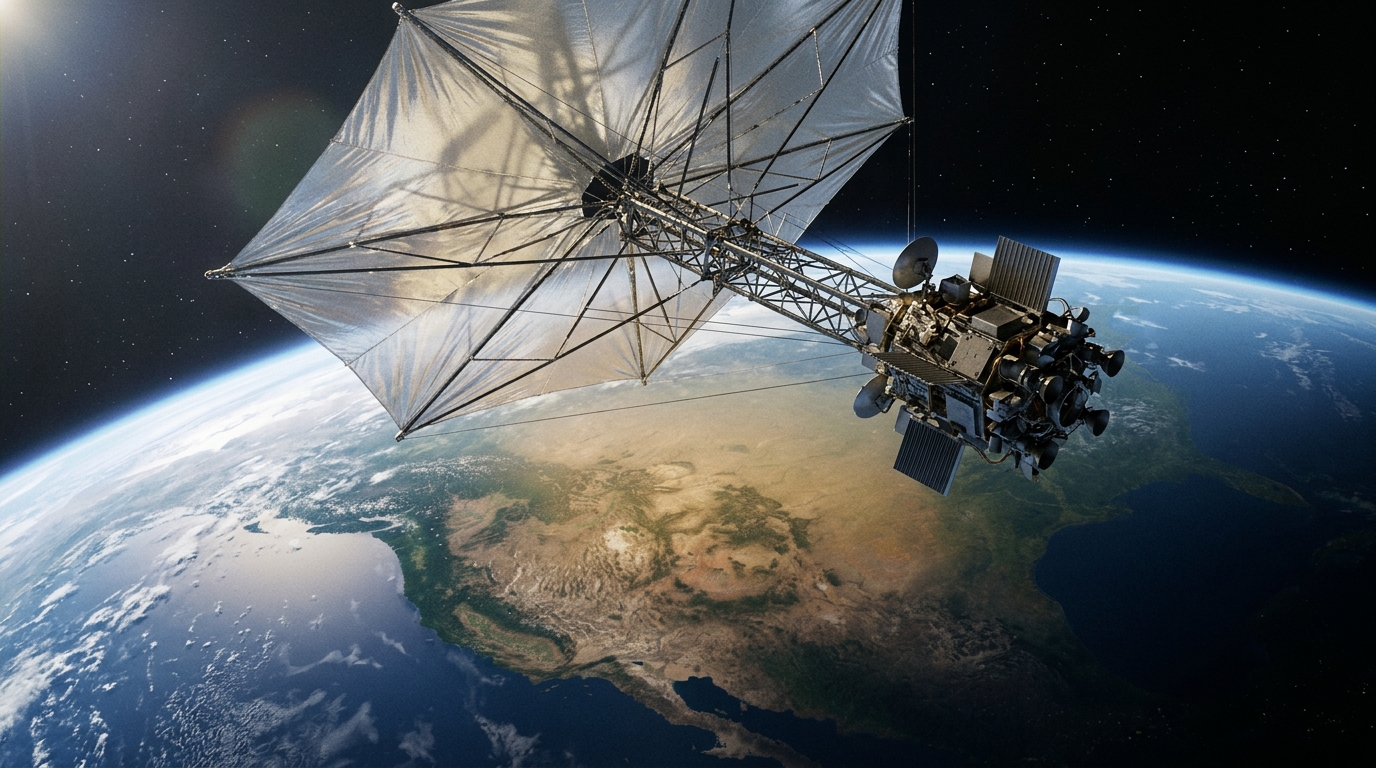
Space-based solar geoengineering could cool the planet by reflecting a small amount of sunlight, but you would not be adjusting a simple thermostat. A mirror or dust cloud could alter rainfall, monsoon cycles, or regional temperatures unevenly, creating ecological damage even if global averages decline. Effects on astronomy also matter because reflective structures could brighten the night sky, interfere with observations, and change humanity’s shared view of space. As governments respond to record temperatures, the precautionary principle asks whether reducing one danger justifies introducing planetary-scale risks that remain difficult to predict.
You would also need to consider the debris and governance problems created by placing large reflective systems in orbit or near the Sun-Earth L1 point. Failed equipment could contribute to orbital pollution, while control over sunlight might give a small number of governments or private actors disproportionate influence over the climate. If a program were suddenly stopped because of war, technical failure, or political disagreement, rapid warming known as termination shock could follow, threatening ecosystems and communities that had adapted to cooler conditions. Even proposals designed only to illuminate places at night raise related questions about astronomy, public consent, and who has the authority to alter a global commons.
Meaningful accountability therefore has to exist before deployment, not after the first unintended consequence. You would expect independent monitoring, transparent data, international authorization, public participation, and clear liability rules for cross-border harm, yet no existing institution can easily enforce all these requirements. Governments should also establish pause conditions, emergency procedures, and responsibilities for long-term maintenance before approving even a demonstration. The deeper ethical question is whether humanity can create governance strong enough to manage planetary intervention, rather than treating technical feasibility as permission to proceed.
Balancing Urgency and Caution in Space Geoengineering
Space solar geoengineering ethics begins with a difficult tension: you cannot treat climate urgency as a reason to abandon caution, but caution cannot mean ignoring escalating harm. Space-based solar radiation modification remains speculative and has not been deployed at climate scale, yet proposals involving orbital mirrors, dust clouds, or structures near the Sun-Earth L1 point could affect the entire planet. The precautionary principle therefore asks you to consider not only whether the technology might reduce warming, but also whether its risks, uncertainties, and possible irreversibility can be responsibly managed. Technical feasibility may justify further research, but it cannot by itself establish moral permission.
Justice makes the question even more demanding because the benefits and burdens would not be shared equally. Cooling the global average temperature could alter rainfall, food production, storms, and ecosystems in ways that help some regions while harming others, including communities that contributed least to climate change. You should also ask who would decide the acceptable level of risk, who would compensate those harmed, and whether vulnerable populations could meaningfully refuse the intervention. Space solar geoengineering ethics must therefore include intergenerational responsibility, Indigenous and local knowledge, and a commitment not to use planetary-scale intervention as an excuse to delay emissions reductions and adaptation.
Ultimately, any movement beyond research would require democratic oversight that reaches across borders and includes people who might bear consequences without having authorized them. Transparent assessments, independent review, public participation, international rules, and clear limits on experimentation would be essential, especially because stopping a long-running intervention could produce abrupt climatic effects. You should view governance not as an obstacle to innovation but as the condition that makes responsible inquiry possible. When an action could influence every person and ecosystem on Earth, humanity’s ability to build it is only the beginning of the ethical conversation.
Frequently Asked Questions
1. What is space solar geoengineering?
Space solar geoengineering, also called space-based solar radiation modification, involves placing reflective structures near the Sun-Earth L1 point or deploying satellite constellations to reduce the sunlight reaching Earth. The goal would be to cool the planet, but the approach remains speculative and undeployed. Its ethical importance comes from the possibility of changing a planetary system that affects every society and ecosystem.
2. How is planetary cooling different from orbital mirrors that redirect sunlight?
Planetary cooling aims to reduce incoming sunlight across much of Earth, while newer orbital mirror concepts would redirect sunlight toward specific locations at night, potentially extending daylight at night. Both could affect astronomy, orbital environments, ecosystems, and access to sunlight, but their physical purposes and risk profiles differ. You should evaluate them separately rather than treating every space-based lighting proposal as climate geoengineering.
3. Why does space solar geoengineering raise ethical concerns?
A small change in sunlight could produce uneven effects on temperatures, rainfall, crops, marine environments, and ecosystems. Some regions might gain from cooling while others experience harmful disruptions, creating serious questions about fairness and compensation. The global scale also means that decisions made by a few actors could affect people who never consented to the intervention.
4. Who should decide whether space-based solar geoengineering is developed or deployed?
No single country, company, or wealthy individual should control a technology capable of altering the climate for everyone. Legitimate decision-making would require broad international cooperation, transparent scientific review, meaningful public participation, and representation for communities most exposed to climate and geoengineering risks. Governance should be established before technical momentum or emergency claims make deployment seem inevitable.
5. What does the precautionary principle mean in this context?
The precautionary principle means you should take potential harm seriously when evidence is uncertain, especially when the consequences could be global or irreversible. Uncertainty is not proof that a project is safe, and it should not be treated as permission to proceed without safeguards. Applying precaution could support limits on experiments, independent assessments, and clear conditions for stopping research or deployment.
6. Could space solar geoengineering create new environmental or orbital harms?
Yes. Reflective structures could alter regional climate patterns, affect agriculture and rainfall, and create risks for marine and terrestrial ecosystems. Large orbital systems could also contribute to congestion, collision risks, space debris, and interference with astronomy, while their manufacture and launch would create additional environmental impacts. These harms must be assessed across the full life cycle, not only by measuring possible temperature reductions.
7. How could accountability work if the intervention causes harm?
Accountability is difficult because climate effects would cross borders and might result from complex interactions rather than a single visible failure. Any responsible framework would need clear liability rules, independent monitoring, public reporting, emergency procedures, and funding for affected communities before deployment begins. Without enforceable responsibility, people who benefit from control could avoid the costs imposed on those who suffer the consequences.
8. Could space solar geoengineering ever be ethically responsible?
It might be considered responsible only under strict conditions, including compelling evidence of necessity, transparent international governance, meaningful consent, rigorous risk assessment, and protection for vulnerable populations. It should not replace emissions reduction, adaptation, or efforts to remove greenhouse gases because cooling sunlight would not address ocean acidification or the underlying cause of climate change. If the risks remain impossible to distribute fairly or govern effectively, refusing deployment may be the more ethical choice.