
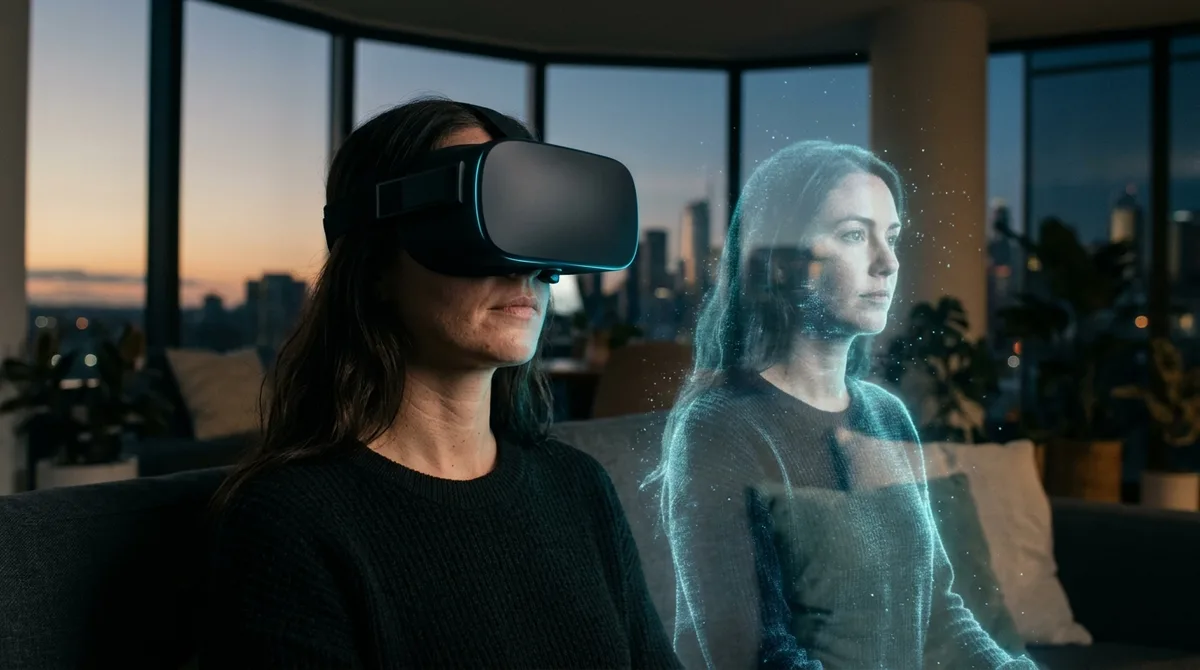
Virtual reality personhood in 2026 does not extend to avatars. An avatar or digital replica represents a person but is not a legal person with rights of its own. The ISO/IEC 24216-1:2026 standard, published in May 2026, defines an avatar as a graphical object representing a user, which treats it as an interface rather than a rights holder.
This matters because the costs and risks fall on the people behind a persona. A personalized AI twin can carry a setup fee of around $8,000 plus recurring charges, such as $299 a month for 500 live-avatar minutes. A legal analysis finds that when avatar conduct causes harm, existing law must identify a liable party. Consent, AI disclosure, and control after death are what the law actually addresses, and those rules vary by place, from California and Tennessee to the EU AI Act.
Key Takeaways
- You should treat a virtual reality avatar as an interface rather than a legal person, because ISO/IEC 24216-1:2026 defines an avatar as a graphical object representing a user, and current legal analysis holds that avatars lack legal personhood.
- When avatar conduct causes harm, a claim must identify a liable party under existing law, since the avatar itself cannot be sued.
- Before you build a permanent digital persona, you should be able to answer six questions in writing: its purpose, who consented to its use of a voice or likeness, what data it draws on, who pays over time, who gets access after death, and how it is shut down or transferred.
- A personalized AI twin can cost around $8,000 to set up, plus recurring charges such as $299 a month for 500 live-avatar minutes, so the monthly charges become the bigger cost over time, before any overage charges.
- You should obtain specific, signed consent from every person whose voice or likeness will appear, because California’s AB 2602 makes vague digital-replica contract terms unenforceable when that person has neither a lawyer nor union representation.
Is a Virtual Reality Avatar a Legal Person?
No, a virtual reality avatar is not a legal person. It represents a person but holds no rights or duties of its own. A persona can speak, look, and respond like a human being without being one, and that resemblance is what causes most of the confusion.
Consider the grief-therapy platform SITh.XRaedo, which appeared among the 2026 CES Innovation Awards. It builds an avatar of a deceased loved one from a photo, and a therapist controls it live through an XR headset. In that case, the avatar is only the medium through which the therapist works, so any question of liability has to be traced to the people operating it.
The law treats a replica as something a person can misuse, not something that can be wronged. The U.S. Copyright Office defines a digital replica as a recording that realistically but falsely depicts an individual, and it has recommended a federal law against knowingly distributing unauthorized replicas. The protected party is the person depicted.
Tennessee’s ELVIS Act, effective July 1, 2024, adds voice to protected commercial identity rights. A sound-alike voice used without permission gives the real person a claim, while the voice clone itself has none.
Starting August 2, 2026, Article 50 of the EU AI Act requires that people be told when they are interacting directly with an AI system, unless that is obvious, and that deepfake content be disclosed.
When harm occurs, a claim has to identify a liable party under existing law, because the avatar itself cannot be sued.
Who Should Consider Building a Permanent Digital Persona?
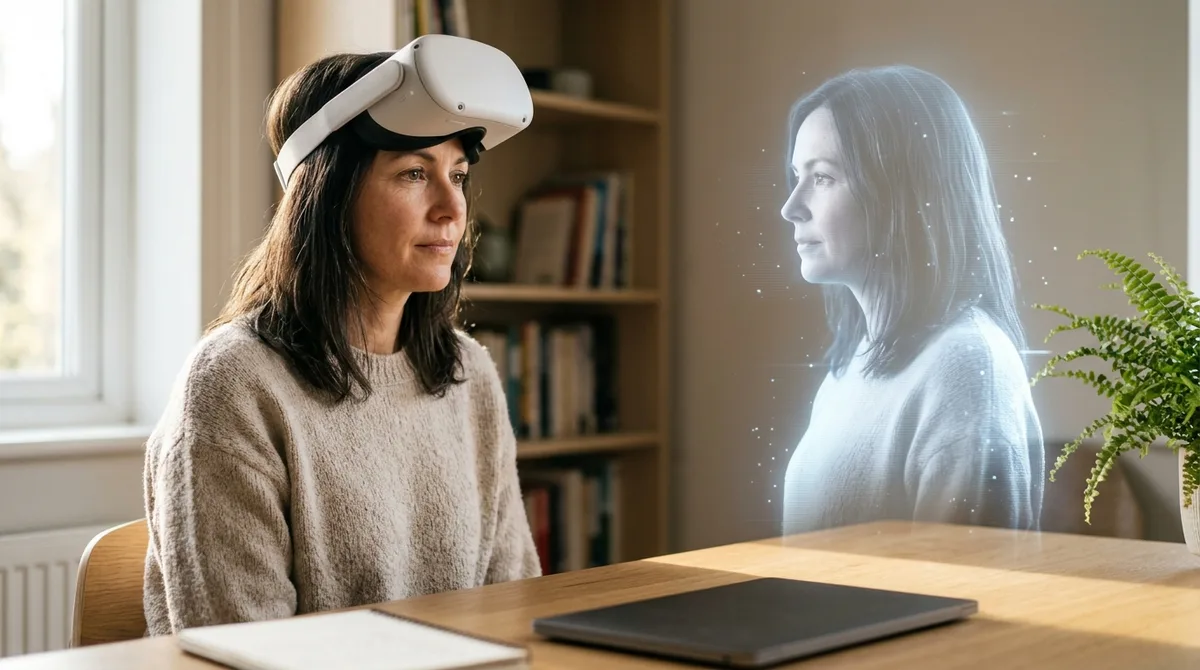
A permanent digital persona is worth considering only when you can answer six questions in writing: what it is for, who has consented to its use of a voice or likeness, what data it draws on, who pays for it over time, who gets access after death, and how it is shut down or transferred. If any answer is vague, the persona is not ready to build.
A good fit is a teacher or public speaker who wants a consistent presence across courses or talks and understands that the avatar delivers material you wrote and approved. Someone who has decided who controls their likeness and has named a successor in writing is also well placed. Businesses with a narrow, documented use, such as a training presenter working from fixed scripts, can pass the same test.
Anyone seeking a guarantee of permanence should hold off. A paid service does not guarantee permanence or an independent legal identity, and subscriptions can lapse when funding stops. Even legal protection is time-limited: California’s postmortem rights over a deceased person’s digital voice or likeness expire 70 years after death.
Hold off, too, if you are unsure who should control the persona later. A family that disagrees about access, or a person who has not chosen a successor, will face that dispute at the moment the persona is most needed.
Most important, do not proceed without consulting the people whose voice or likeness would appear. Colleagues, relatives, and students recorded in sessions all have a stake. California’s AB 2602 shows why this matters: certain digital-replica contract terms become unenforceable when the agreement lacks a reasonably specific description of intended uses and the person has neither a lawyer nor union representation.
Services of this kind typically require the person’s own identity and likeness consent along with a formal service agreement. They also expect you to define successor access, ongoing funding, and service continuity for any legacy presence. Treat those requirements as a checklist to complete before you commit.
What Do Consent and Likeness Laws Actually Protect in 2026?
The main legal questions in 2026 are whether the real person agreed to the use of their voice or likeness, whether audiences are told that AI produced what they see or hear, and who controls a replica afterward. These rules protect people, not the avatars that represent them.
The U.S. Copyright Office reviewed more than 10,000 public comments before issuing its July 2024 report, which focused on realistic video, images, and audio that are digitally made or altered. Its recommendation for a federal law against knowingly distributing unauthorized replicas remains a proposal, not a national rule. For now, the protection you can rely on comes from state law and the rules where you publish.
Tennessee’s postmortem rights, as summarized in its bill record, run for 10 years and can end after two years of specified non-use beyond that initial period. California’s AB 1836 is different in structure, so the two states should be checked separately.
Requirements change with the audience. The same persona might need a clear on-screen notice for European viewers, a consent document drafted to meet California’s contract rules, and postmortem terms that fit Tennessee’s timeline. A single version rarely satisfies every place where it appears.
Before you publish, list each country and state where the persona will be shown, recorded, or sold. Then check which consent, disclosure, and postmortem rules apply in each one, and keep the signed records where you can produce them quickly.
How Much Does a Personal Digital Twin Really Cost?
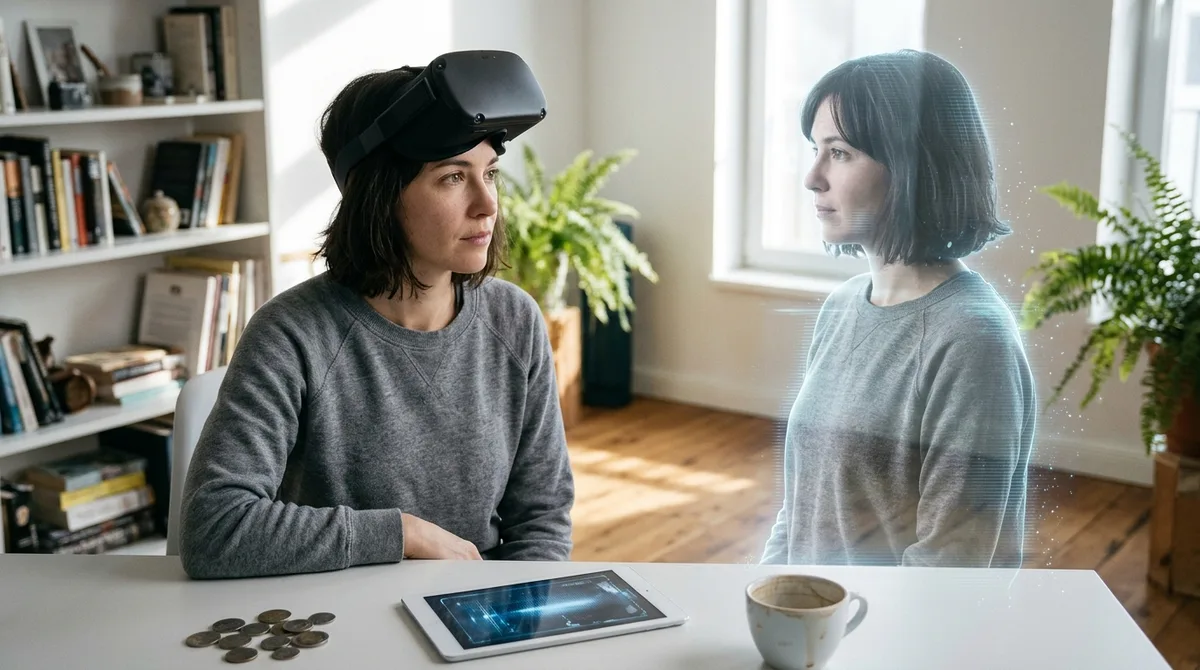
A personal digital twin costs far more over its life than its setup fee suggests, because recurring charges and usage limits drive most of the bill. Personalized AI twin services in the market typically carry a setup fee around $8,000, plus recurring charges such as $299 a month for 500 live-avatar minutes, with extra usage around $0.50 per minute. Those monthly charges keep accumulating for as long as the persona runs, which is why the recurring cost usually determines the total.
Most persona pricing follows the same pattern. You pay a setup fee to build the likeness, a monthly subscription that buys a block of usage, and overage charges once that block runs out. Entry-level plans for visual agents in the market can start at around $5.90 a month, but a cheap plan covers only light use, so check what it includes before you assume the headline price is your cost.
The most overlooked factor is ongoing funding. If payments stop, the service may stop running the persona, and the avatar you built can go offline with it. Before you commit, ask in writing whether the persona keeps working during a lapse, whether your recordings and scripts can be exported, and how long the provider retains them.
Treat the cost as a multi-year commitment rather than a one-time purchase. Estimate how many minutes you will actually use each month, and budget for the full period in which you expect to need the persona.
What Happens to Your Persona After You Die?
Your persona outlives you only if you arrange that in writing before you die, because no current law gives an avatar a claim to keep running after its creator is gone. Successor access, service continuity, and postmortem rights are the questions most people overlook until a family member asks about them.
Personalized twin services of this kind usually require the customer’s own identity and likeness consent and a formal service agreement, and they expect successor access, ongoing funding, and service continuity to be defined for any legacy presence. Read those terms before you sign, because the contract you accept today may be the only document your family can point to later.
Legal protection runs on its own clock. Tennessee’s postmortem rights, as its bill record describes them, last 10 years and can be terminated after two years of specified non-use beyond that initial period. California’s AB 1836 requires prior consent for specified uses of a deceased person’s digital voice or likeness in expressive audiovisual works and sound recordings, so heirs cannot assume they may reuse a voice simply because they hold the files.
The grief-therapy example shows why this is more than a theoretical concern. SITh.XRaedo, recognized at the 2026 CES Innovation Awards, builds an avatar of a deceased person from a photo, and a therapist steers it live. A bereaved family may come to depend on that presence, which makes the question of who keeps it running urgent.
Before you commit, write three things down: a named successor, a list of who may use your likeness and for what purposes, and a shutdown procedure that states what happens to the avatar, recordings, and scripts if payments stop or the service closes. Give copies to your successor and to the provider.
Do Headsets, Platforms, and Terms Affect Your Persona?
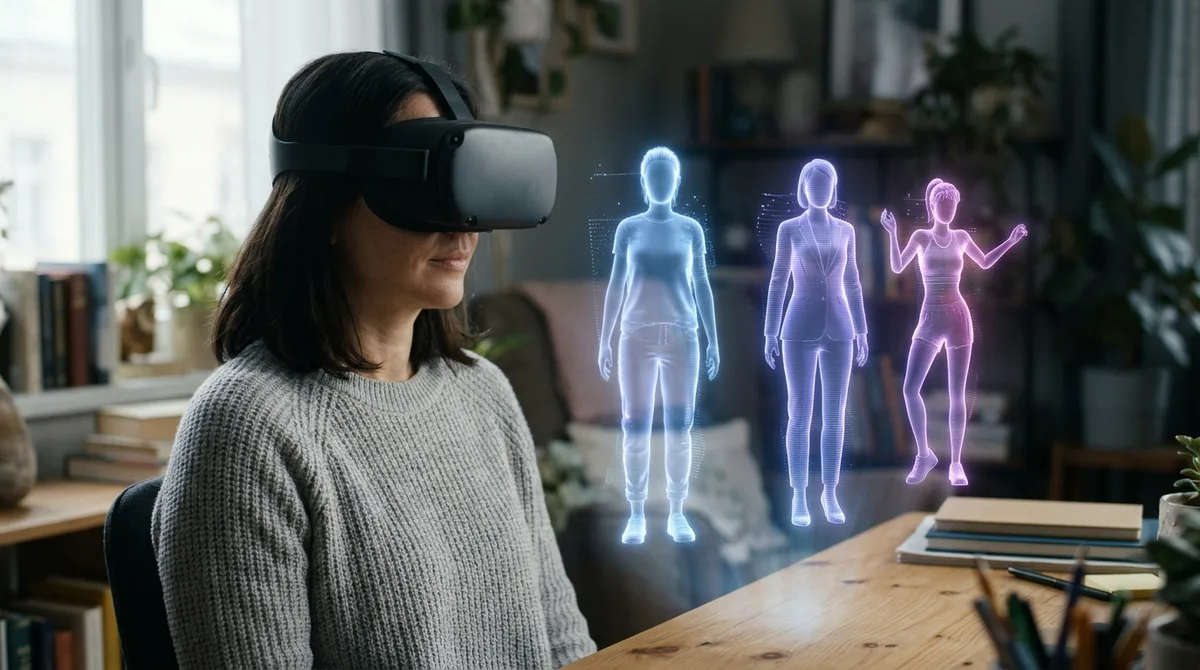
Headsets and platforms shape how convincing a persona looks, where it can run, and how much control you keep over it. Field of view is how much of your vision the screen fills. A narrow view makes an avatar look like it sits in a window rather than in the room. Foveated rendering sharpens the image where your eye is pointed and softens the edges, which frees processing power for finer detail on faces.
Hardware design involves a trade-off between weight and power. Split designs move the battery and processor into a pack on your belt or a puck on a cable, which keeps the headset light but adds a cord. Standalone headsets carry everything on the head, so they are easier to wear but have less computing power. PC-connected headsets, often called PCVR, borrow a computer’s graphics power and can render richer avatars, but they depend on a desk and a cable.
Platform choice matters even more for control. Meta’s Quest headsets run Horizon Worlds and Horizon Workrooms, and Meta sets the rules for what your avatar can do and what data it collects. Meta’s Ray-Ban glasses record audio and video but are not a place where a persona lives. Apple Vision Pro runs Apple’s visionOS, so Apple controls the software, the app store, and the update schedule.
Platform risk is real. Several social VR platforms have shut down or scaled back, and a persona tied to one of them can disappear with it. Keep your scripts, recordings, and avatar files in formats you can export and move elsewhere.
Before you upload anything, read the terms of service and privacy policy. Check how long they run, whether the provider can change them unilaterally, and whether they allow reuse of your voice, image, or behavioral data to train AI models. If the wording is broad, assume your recordings may be used beyond your persona.
Deciding Whether a Persona Is Worth Your Investment
Start by writing down your answers to the six questions: purpose, consent, data use, ongoing funding, access after death, and shutdown or transfer. Mark each answer as settled, unsure, or missing. If more than one is unsure or missing, pause the project until you can resolve them.
Next, identify every person whose voice or likeness will appear, including yourself, colleagues, and anyone recorded in sessions. Ask each of them to sign a consent document that lists the specific uses, such as a particular course series or a named set of talks. Vague wording like “any future use” is the kind of term that California’s AB 2602 makes unenforceable when the person has no lawyer or union representative. Keep a signed copy of each document.
Then read the provider’s agreement against your written answers. Check the monthly minute allowance, the overage rate, whether the persona keeps running during a payment lapse, and whether your scripts and recordings can be exported. Google and D-ID announced new conversational avatar capabilities in 2026, so features and terms may shift between your research and your signature. Reread the terms on the day you sign.
If your persona is meant to outlast you, name a successor in writing and give that person a copy of the shutdown procedure before anything goes live.
Frequently Asked Questions
1. Do I need a lawyer to draft a likeness consent agreement for my own digital twin?
A lawyer matters most when someone else’s likeness is involved, because California’s AB 2602 makes some digital-replica contract terms unenforceable when the person has neither legal counsel nor labor-union representation. For your own persona, a lawyer can check that the consent wording describes intended uses specifically enough for each state and country where the persona will appear. Vague consent language about future uses is the kind most likely to cause trouble later.
2. Can I create an avatar of a deceased relative from their photos without family consent?
Not without checking the law that applies, because the rules depend on the state and on how the avatar will be used. In California, AB 1836 requires prior consent for specified uses of a deceased person’s digital voice or likeness in expressive audiovisual works and sound recordings, and those postmortem rights last 70 years after death. Tennessee’s postmortem rights run 10 years and can end after two years of specified non-use beyond that period, so a family’s position can differ from one place to another.
3. Will a persona built on today’s platform still work if I switch headsets in a few years?
Not automatically, because a persona depends on the platform’s software, file formats, and update schedule as well as on the headset itself. Meta’s Quest platforms and Apple’s visionOS each set their own rules and software updates, so a persona tied to one of them may not move cleanly to another. Export your scripts, recordings, and avatar files in formats you can use elsewhere, and confirm the provider’s export terms before you commit.
4. Is it worth paying for a persona service if I only need it for a short project?
A short project rarely justifies a full build, because a personalized twin’s setup fee is due before any usage, and its subscription adds recurring monthly charges for a fixed block of live-avatar minutes. Entry-level visual agent plans in the market start at around $5.90 a month but cover only light use. Compare the minute allowance against the length of your project, and check whether the plan lets you cancel without paying for months you no longer need.
5. How can I tell whether a platform may use my persona’s recordings to train its AI models?
Start by searching the terms of service and privacy policy for explicit references to training, machine learning, or improving the provider’s models. Broad phrases such as “improving our services” can leave room for model training, so read them closely before uploading any voice, image, or behavioral data. If the answer is unclear, ask the provider in writing whether your recordings are used for training and whether you can opt out.