

Recent space property rights news centers on the Artemis Accords, a set of nonbinding principles that reached its 77th signatory when Uzbekistan joined on October 19, 2026. If you have seen headlines calling this a new lunar mining treaty, you are not alone, but the Accords expand an existing framework rather than creating a separate binding agreement. Their resource provision states that extraction does not inherently amount to national appropriation, yet it must remain consistent with the 1967 Outer Space Treaty, which bars countries from claiming the Moon or any celestial body.
Expectations need tempering, too. A UK government review estimates that moving propellant from Earth to the lunar surface costs about US$36,000 per kilogram, and a 2020 study found that lunar extraction of precious metals or helium-3 is unlikely to be economically viable before 2040. So as you follow each announcement, ask two questions: what rights does the legal framework actually grant, and can anyone exercise them yet? The answers depend heavily on which treaty or national law applies, and that is where the real debate begins.
Key Takeaways
- You should read the Artemis Accords as a set of nonbinding political principles that expands an existing framework, since Uzbekistan’s October 19, 2026 signature made it the 77th signatory rather than creating a separate lunar mining treaty.
- You should remember that the Outer Space Treaty’s Article VI makes states internationally responsible for national space activities, so a government must authorize a private company’s space mission before it begins and supervise that mission while it lasts.
- You will find that the Moon Agreement’s Article 11 bars resources in place from becoming the property of any state, organization, entity or natural person, while 51 U.S.C. § 51303 lets a U.S. citizen who commercially recovers a space resource possess and sell it, subject to U.S. international obligations.
- You should not expect commercial lunar extraction soon, because a UK government review estimates that moving propellant to the lunar surface costs about US$36,000 per kilogram and a 2020 Institute for Defense Analyses study found that extracting precious metals or helium-3 is unlikely to be economically viable before 2040.
Did the Artemis Accords Create a New Lunar Mining Treaty?
No, the 2026 news did not create a separate lunar mining treaty. Uzbekistan became the 77th signatory to the Artemis Accords on October 19, 2026, which adds one more country to a framework that already exists. Read the headline carefully and you will usually find that it describes a new member joining, not a new law being written.
The Accords were established in 2020, and NASA itself describes them as nonbinding principles grounded in existing space treaties. They build on earlier agreements rather than replacing them, which is why their wording so often refers back to the 1967 Outer Space Treaty.
The difference between a political commitment and a treaty obligation is at the heart of the confusion. A treaty obligation is a legal duty that a state takes on through a formal agreement, and it can be enforced through that agreement’s processes and, in many cases, through national courts. A political commitment is a public statement of intent. A country that signs it is saying what it intends to do and how it will behave, but no court can order it to comply, and no penalty automatically follows if it does not.
Signing the Accords therefore expands political commitments without creating enforceable property rules on its own. The resource provision in Section 10 says that extracting a resource does not inherently amount to national appropriation, but it also requires that contracts be consistent with the treaty and that signatories report their extraction activities to the UN Secretary-General, the public and the scientific community. Those are promises about conduct, and they gain legal weight only where a country writes them into its own law.
The stronger legal anchor is the Outer Space Treaty, which makes states internationally responsible for their national space activities. Under its Article VI, a state must authorize and continuously supervise the activities of its private companies in space. That requirement is a true treaty obligation, and it is one reason a signature on a voluntary set of principles should be read as a signal, not as a finished property regime.
How the Outer Space Treaty Blocks National Claims
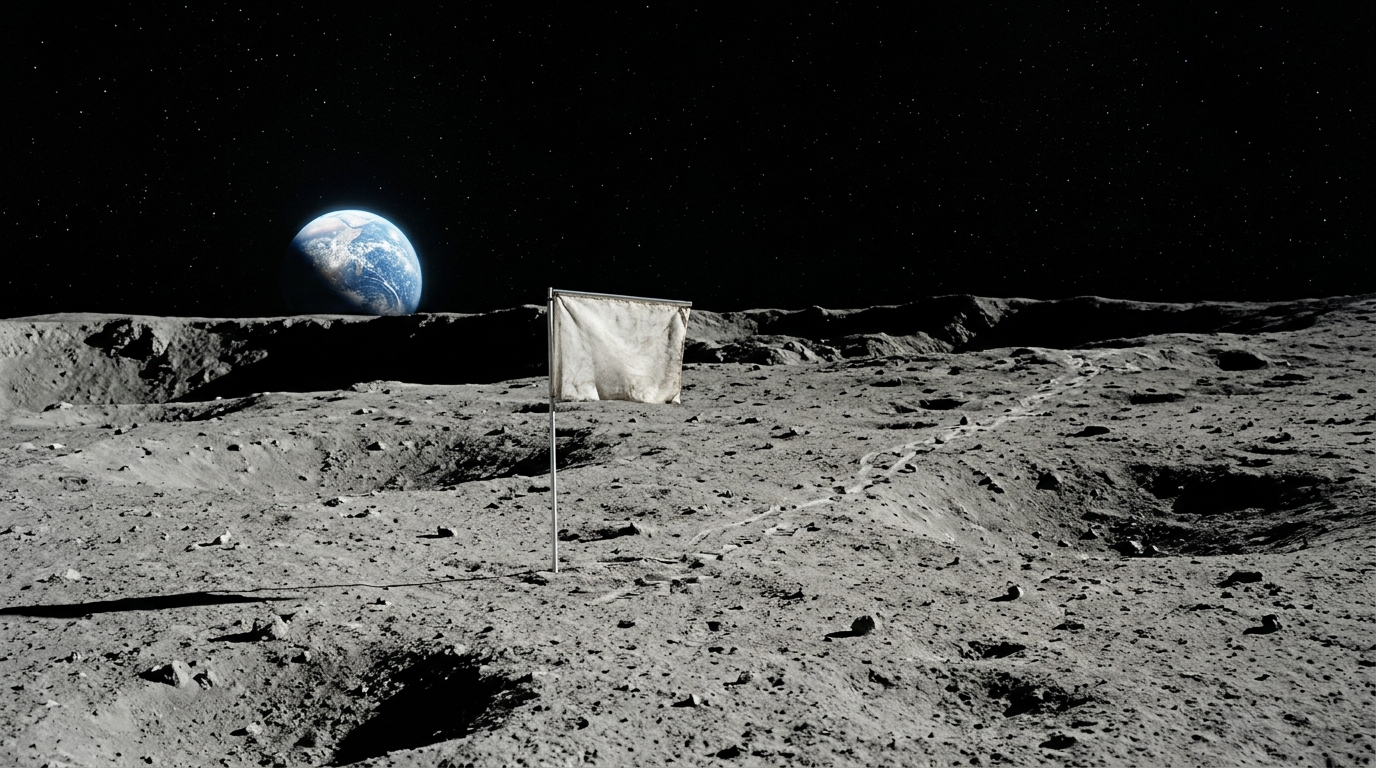
The foundation of the debate is the 1967 Outer Space Treaty, the basic rulebook that spacefaring states still treat as their starting point. Its Article II bars national appropriation of outer space, the Moon and other celestial bodies. The ban covers claims made by sovereignty, use, occupation or any other means, so a flag planted on the lunar surface cannot turn a patch of ground into a country’s territory.
Article VI addresses a different question: who is accountable when a private company goes to space. It makes states internationally responsible for their national space activities, including those carried out by nongovernmental entities. A company that launches a lunar lander does not answer to the international community directly. Instead, the appropriate state must authorize that activity before it begins and supervise it continuously while it lasts.
That supervision requirement is more than paperwork. A government cannot approve a mission and then look away, because the treaty expects it to keep watching what the firm does. This is why national licensing laws matter so much. The United Kingdom’s Space Industry Act 2018, for example, generally prohibits spaceflight activities in the UK without a licence issued under the Act.
The tension appears when you ask what happens after extraction. The treaty is clear that countries cannot claim territory, but it says comparatively little about who owns a resource once it has been pulled from the lunar surface or an asteroid. A ban on claiming land does not automatically settle whether a company may keep the regolith it mined. That gap is where much of today’s property rights argument takes place.
Does Extracting a Resource Make It Yours?
Not automatically. Under the main frameworks, pulling a resource out of the ground does not by itself settle who owns it. The answer depends on which rulebook applies and whether the material is still in place or has already been removed.
The Artemis Accords take the most permissive position. Their Section 10 states that extraction does not inherently constitute national appropriation. It attaches conditions, though. Contracts must be consistent with the Outer Space Treaty, and signatories must report extraction activities to the UN Secretary-General, the public and the scientific community.
The Moon Agreement is much stricter. Its Article 11 declares lunar natural resources the common heritage of mankind. It also says that resources in place cannot become the property of a state, organization, entity or natural person, which closes off private ownership of material still in the ground.
The United States goes in the opposite direction. Under 51 U.S.C. § 51303, a U.S. citizen who commercially recovers an asteroid or space resource may possess, own, transport, use and sell it. That right is expressly subject to applicable law and U.S. international obligations, and that qualifier is where much of the argument sits.
The Moon Agreement has also struggled to attract members. The Congressional Research Service reported in July 2024 that it had 17 parties, and that the United States and other major space powers were not among them. A rule that those powers have not accepted cannot easily settle the question on its own.
The central fault line is the difference between resources in place and resources once extracted. The Moon Agreement protects the material before it is removed, while U.S. law grants rights once it has been recovered. The Artemis Accords sit awkwardly between the two, treating extraction itself as lawful without spelling out who holds the material afterward.
That gap explains why the status of extracted-resource rights remains contested. No single binding treaty resolves it, and the Outer Space Treaty says little about ownership of removed material. When you read a new announcement, check where the material was when it was claimed, which state authorized the mission, and whether the contract complies with the treaty conditions.
Where the United States, the UK and the Moon Agreement Diverge
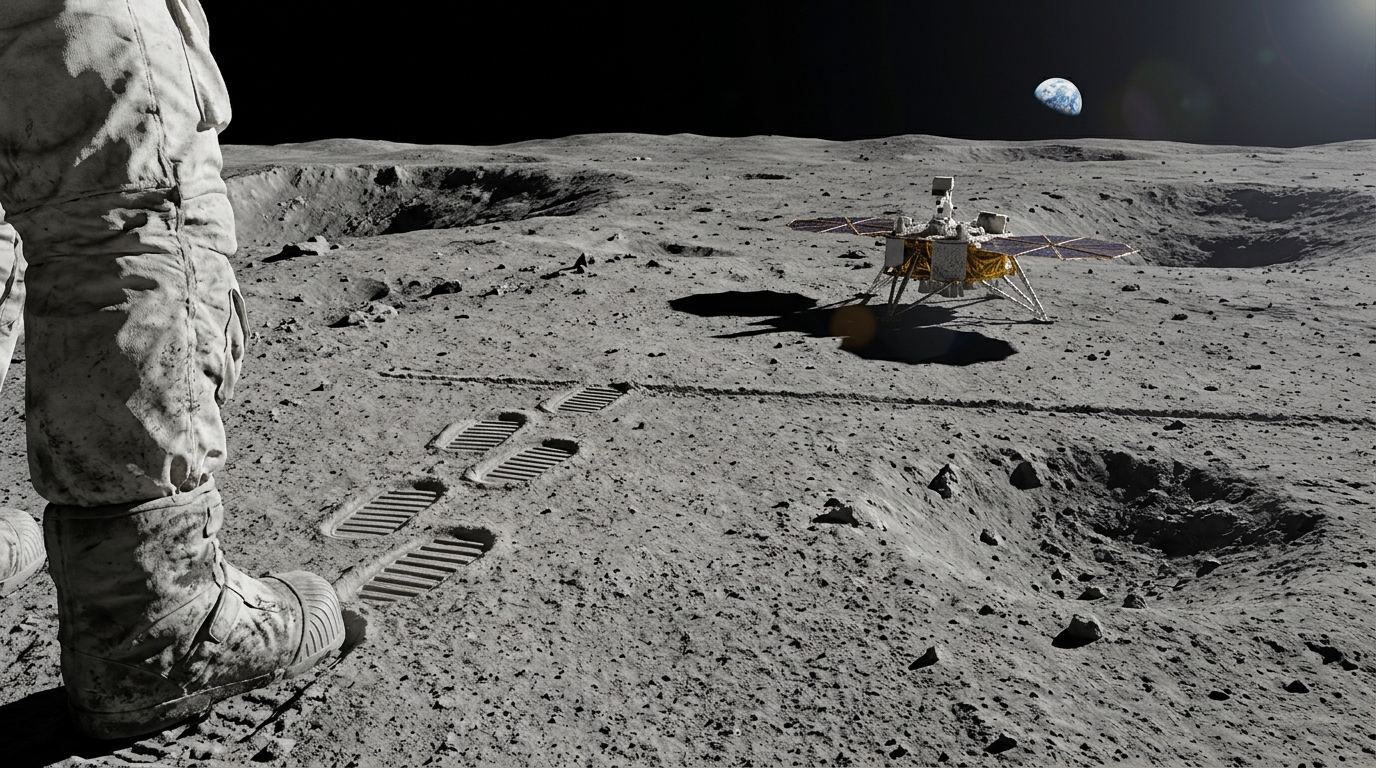
The United States, the United Kingdom and the Moon Agreement give different answers to the same question, so the nationality of the company and the country that licenses its mission both matter. The Congressional Research Service reported in July 2024 that the Moon Agreement had 17 parties, and the United States and other major space powers were not among them. That gap is why American and British approaches carry so much weight.
U.S. law is the most explicit about private rights. A citizen who commercially recovers a space resource is entitled to keep and sell it, but only within the limits of U.S. international obligations. The United Kingdom works differently. Its Space Industry Act 2018 generally prohibits spaceflight activities, and operating a spaceport, without a licence issued under the Act. That rule governs what you may do and where you may launch from, not who ends up owning the material you bring back.
London’s diplomatic position is also worth watching. On September 14, 2026, the UK Government said it was taking part in UN discussions on lunar resource use and environmental protection through the Lunar Activities Action Team and the Space Resources Working Group. It is seeking international consensus under existing international law, which signals a preference for building rules on current treaties rather than writing new ones.
The practical result is that a company’s rights depend on three things: its nationality, the state that licenses its mission, and the treaties those governments have joined. Imagine a firm incorporated in one country, licensed by a second, and carrying material under a third country’s contract. Each government could apply its own rules, and the firm would need to check all of them before it claimed anything.
Is Mining the Moon Economically Realistic Yet?
No, not for most lunar resources yet, and the property debate is running ahead of the economics. Start with cost. A UK government in-situ resource utilisation review estimates that moving propellant from Earth to the lunar surface costs roughly US$36,000 per kilogram, so any company hoping to mine there must first absorb an enormous launch bill.
NASA’s early commitments are modest. Its four 2020 contracts for companies to collect lunar resources carried a nominal combined value of $25,001, with individual values ranging from $1 to $15,000. Those figures look more like pilot agreements than mining budgets. As of July 2024, none of the contracts had produced a qualifying mission.
The longer outlook is sobering. A 2020 Institute for Defense Analyses study concluded that extracting precious metals or helium-3 from the Moon was not expected to be economically viable before 2040. The main obstacles it identified were the cost of transportation and the cost of developing the technology needed to do the work.
Why should a property lawyer care about an industry that has not started? If extraction stays uneconomic, the rights debate will remain largely theoretical, because no company will be testing the rules in a contract dispute or a courtroom. Early legal frameworks still matter, though. Investors and insurers will ask whether a claim to recovered material would hold up, and a firm deciding where to put its money will weigh the licensing state, its owners’ nationality and the treaties those governments have joined. Clear rules, even partial ones, reduce that uncertainty. Vague rules encourage investors to wait.
Which Sustainability Rules Could Shape Future Claims?
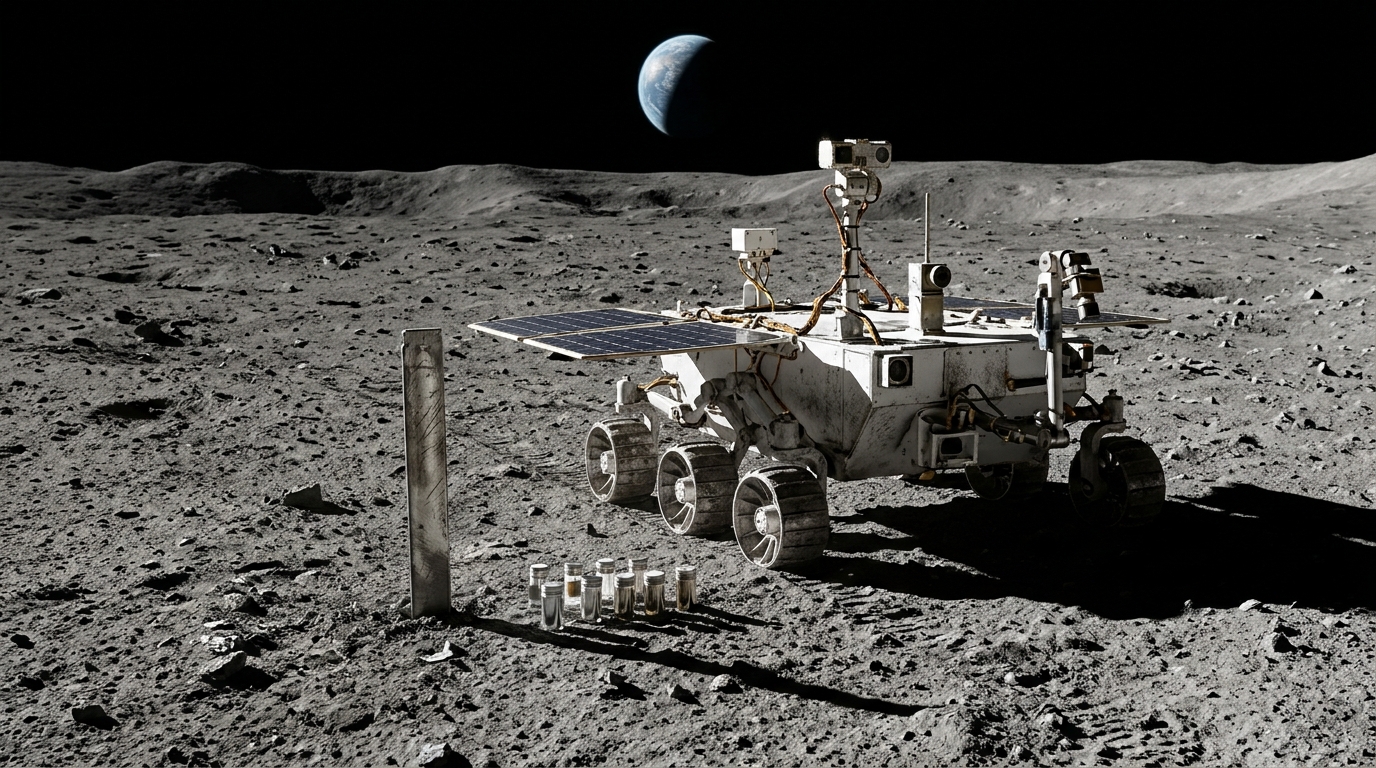
Sustainability rules can shape future property claims by making a right to use a resource depend on how the resource is used, not only on who holds it. Section 11 of the Artemis Accords calls on signatories to give due consideration to the UN Guidelines for the Long-term Sustainability of Outer Space Activities, which the Committee on the Peaceful Uses of Outer Space (COPUOS) adopted in 2019. The Accords add that these guidelines should apply with appropriate changes for operations beyond low Earth orbit, which is where lunar and asteroid work would take place. The UN Office for Outer Space Affairs (UNOOSA) supports COPUOS and its subcommittees, so much of this discussion happens in UN meetings rather than in national capitals.
The notable feature of these forums is that they do not treat environmental protection and resource use as separate conversations. When you read UN working-group materials on lunar activity, you will find questions about how to use a resource and questions about how to protect the surrounding environment placed side by side. That pairing matters for disputes, because a court or arbitrator may ask whether a claimed extraction site was worked in a way that respects other users.
Sustainability obligations can limit or condition a claim in practical ways. Imagine an operator that recovers ice from a polar crater whose lighting and water content scientists want to study. A competing mission could argue that the first operator’s activity makes the site less useful for science, and the authorizing state would be the government best placed to weigh that argument. Reporting duties also help here. If a company must make its extraction activities public, its records become evidence that others can examine when they contest a claim, and a claim built on poorly documented or environmentally careless work may be harder to defend.
Tracking the Next Lunar Property Decisions
Start with a simple watch list. Each time a country joins the Artemis Accords, note the date and the running count, since Uzbekistan’s October 19, 2026 signature made it the 77th. Then read the announcement for one thing: whether the government explains how its own law will treat extracted material, or whether it only repeats the Accords’ wording on extraction.
Next, follow one licensing regime from start to finish. If you are tracking a UK-linked mission, look for the licence that the Space Industry Act 2018 requires before spaceflight activity begins. That licence tells you which government is supervising the work, and therefore which state carries the Article VI duty to authorize and monitor it.
Then check the diplomatic forums. The UK’s participation in the Lunar Activities Action Team and the Space Resources Working Group is a useful starting point, because their agendas show where states are heading on resource use and environmental protection. Set a reminder to review those materials before each COPUOS session.
Finally, keep your own record. For any mission you follow, note the licensing state, the contract terms, the extraction location and any reports filed under Section 10. If a claim is ever challenged, that record is what will show exactly what was done, by whom and when.
Frequently Asked Questions
1. Can a private company legally sell lunar material it mines in a country that has not signed the Moon Agreement?
That depends on the country’s own law, because a state that has not joined the Moon Agreement is not bound by its rules. Article 11 says resources in place cannot become the property of a state, organization, entity or natural person, but only parties to the treaty have accepted that restriction. The company should also check which state licensed its mission, since that state carries the Outer Space Treaty duty to authorize and supervise the activity.
2. Does the Outer Space Treaty apply to Mars and asteroids, or only to the Moon?
The Outer Space Treaty applies to Mars and asteroids as well as to the Moon. Article II bars national appropriation of outer space, the Moon and other celestial bodies, so both Mars and asteroids fall within that ban. A country cannot claim territory there by sovereignty claim, use, occupation or any other means.
3. Who would settle a dispute if two companies claimed the same lunar site?
A dispute over the same lunar site would most likely turn on the national laws of the states that licensed each company’s mission. Under the Outer Space Treaty, those states must authorize and continuously supervise their nongovernmental space activities, which gives them a central role. The treaties those governments have joined would also shape how each claim is judged.
4. What would change for companies if the Moon Agreement’s approach became widely accepted?
Companies would not be able to claim ownership of lunar material while it remains in the ground, because Article 11 says resources in place cannot become the property of any private entity or natural person. Material that has already been removed would still raise the open question the article describes, since the Agreement’s protection focuses on resources before extraction. Investors would therefore need to weigh that restriction carefully before funding any lunar extraction project.